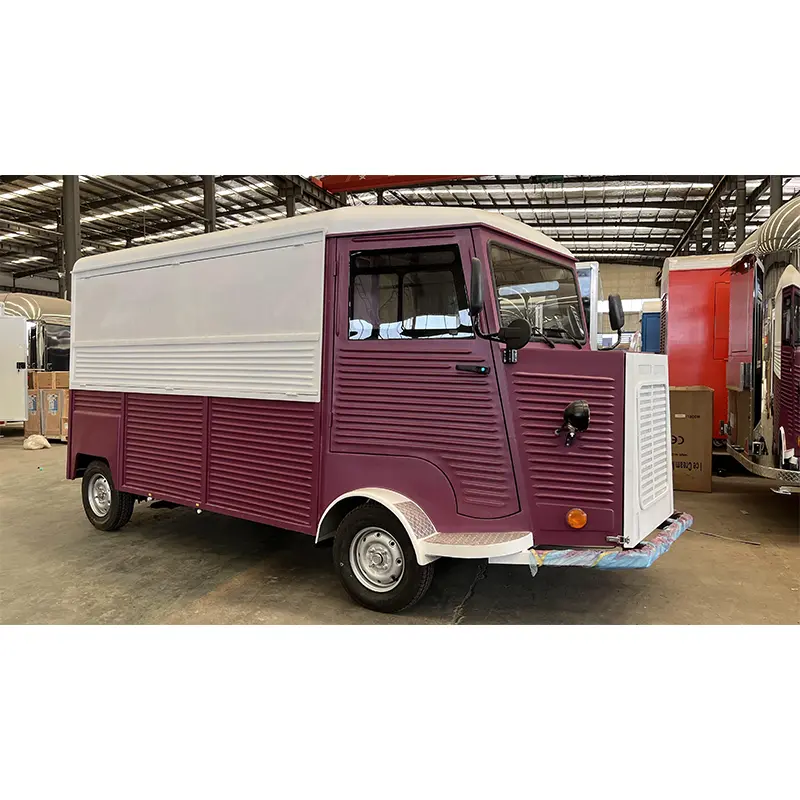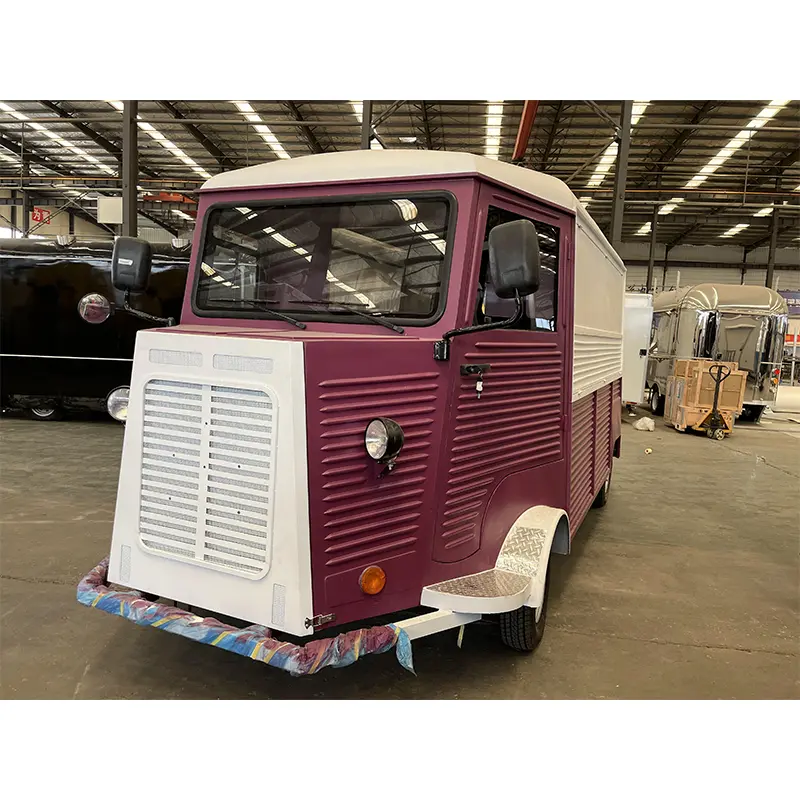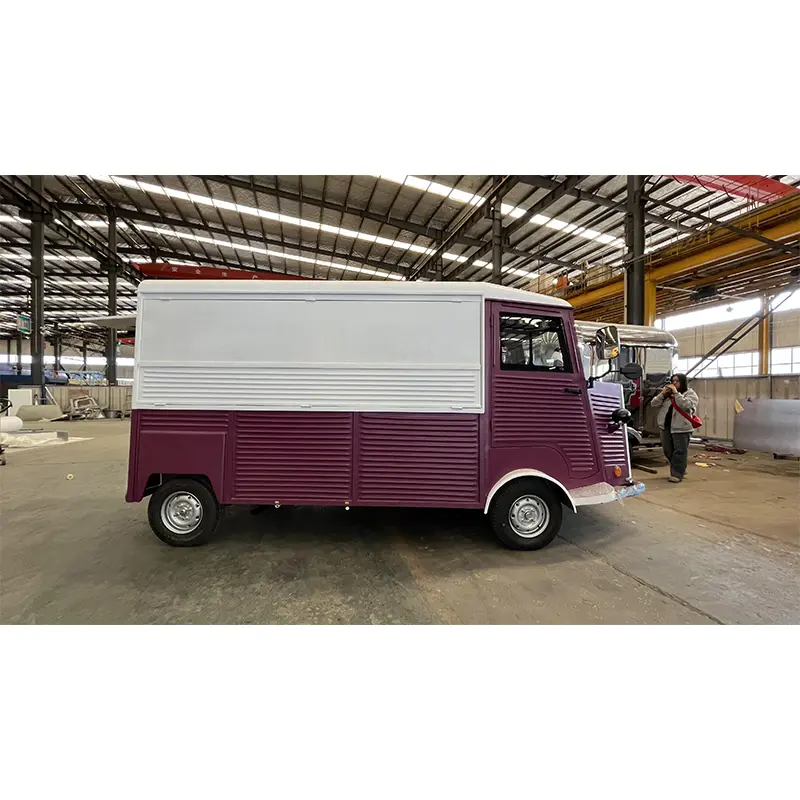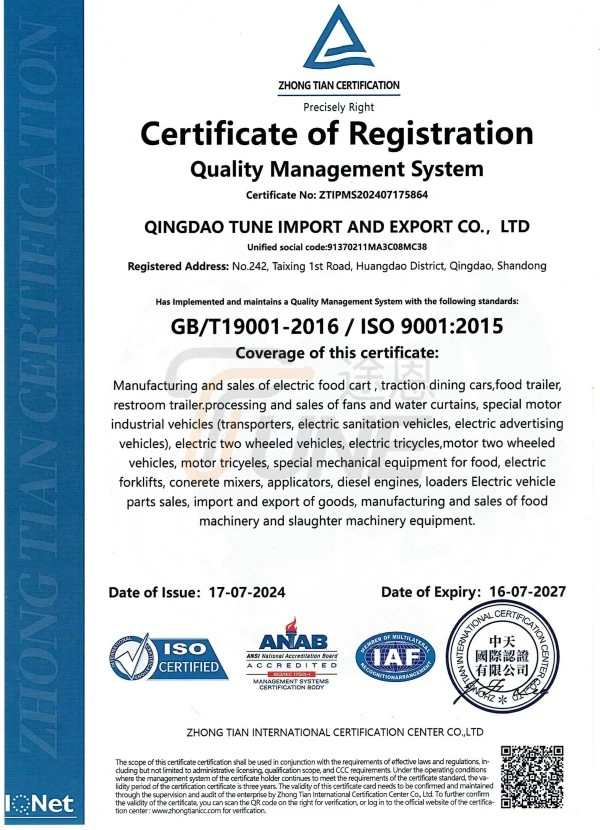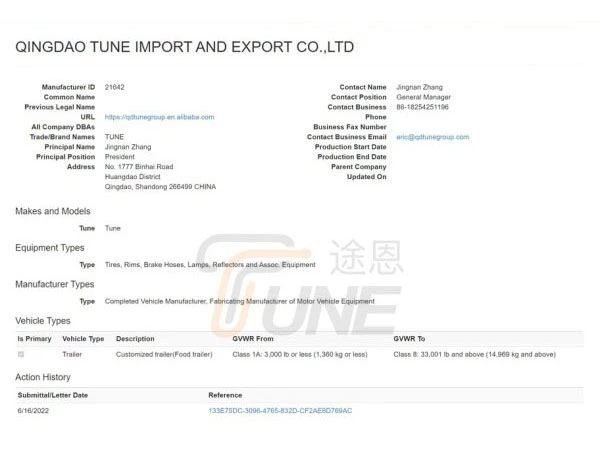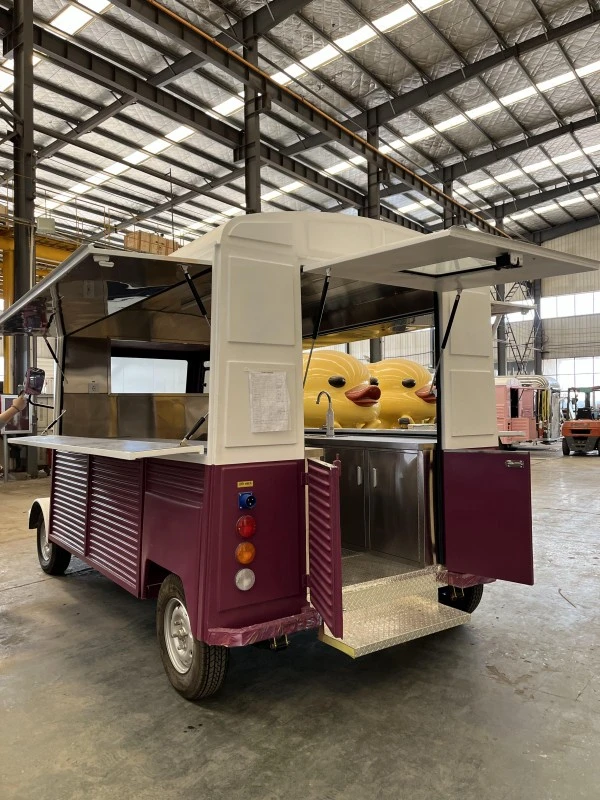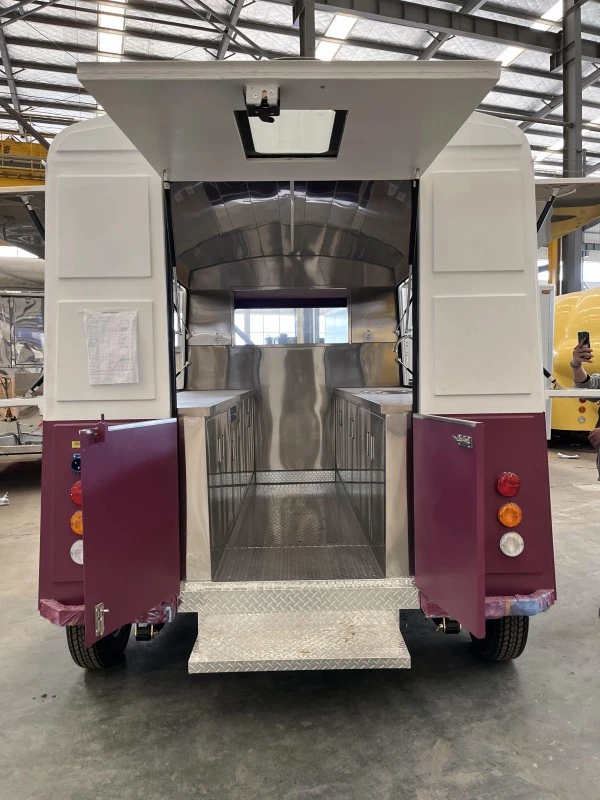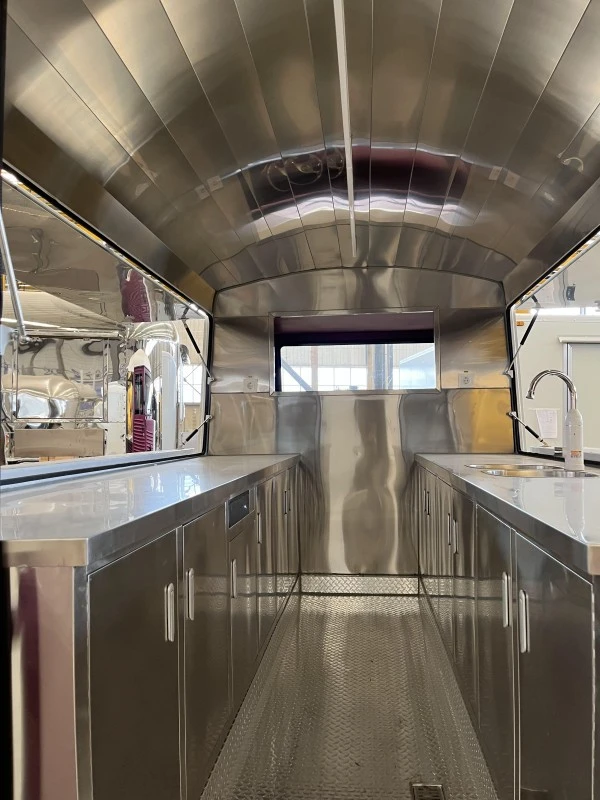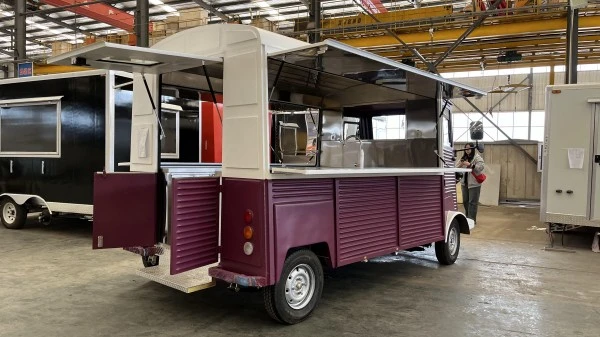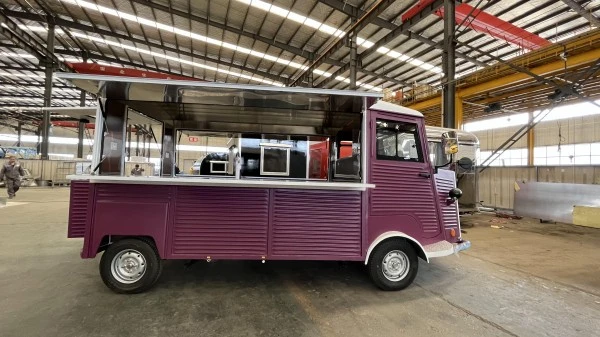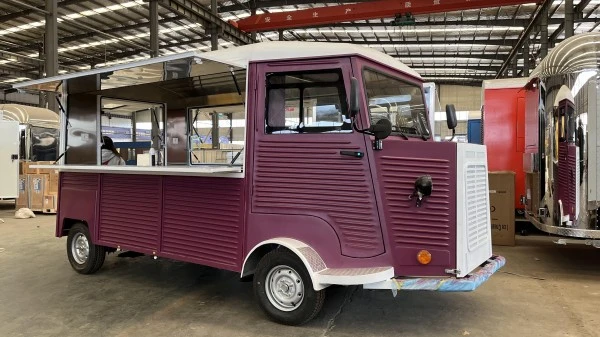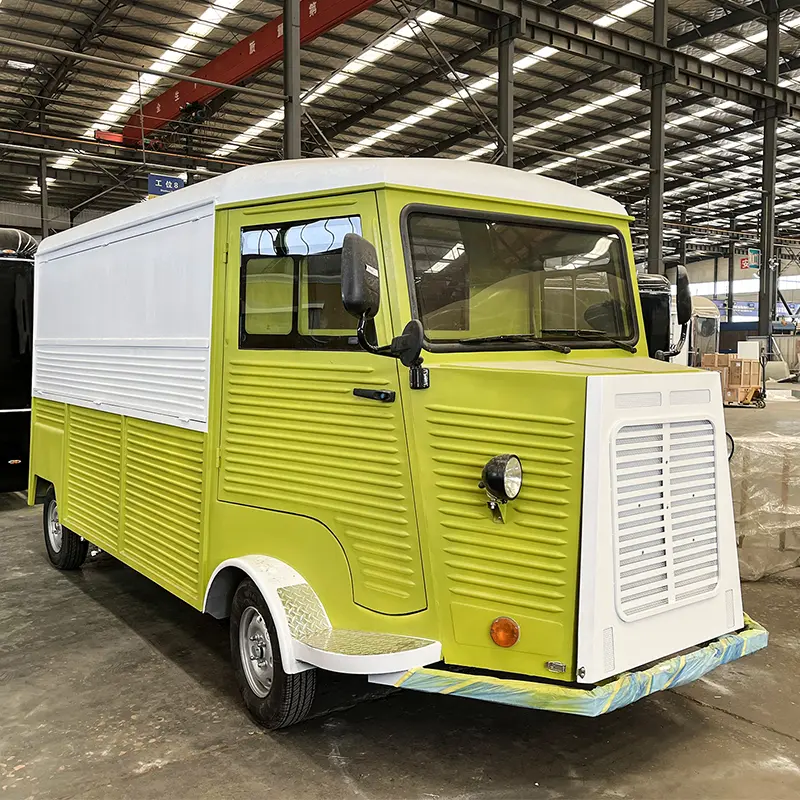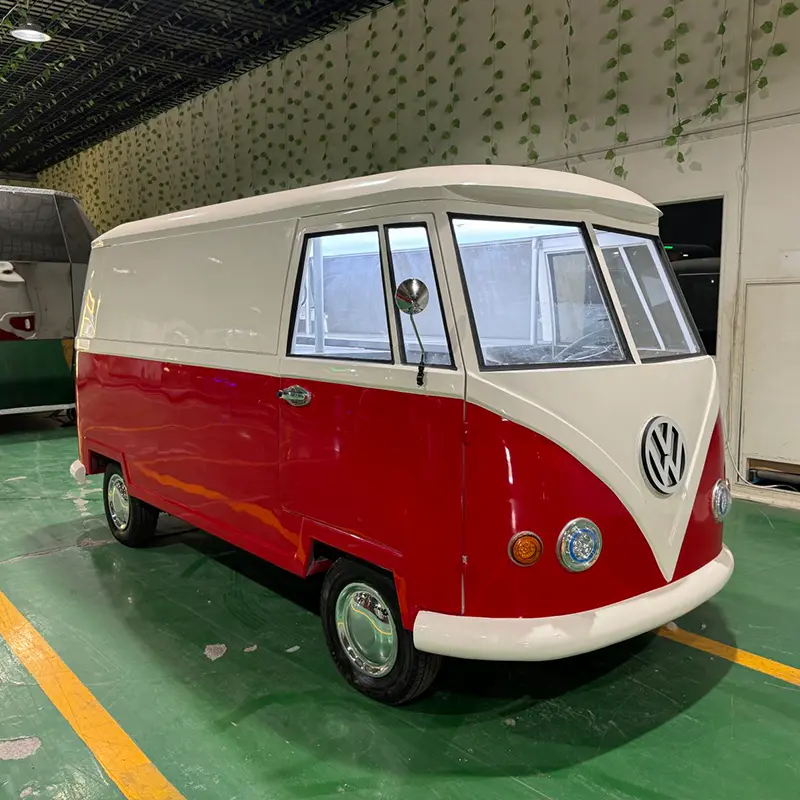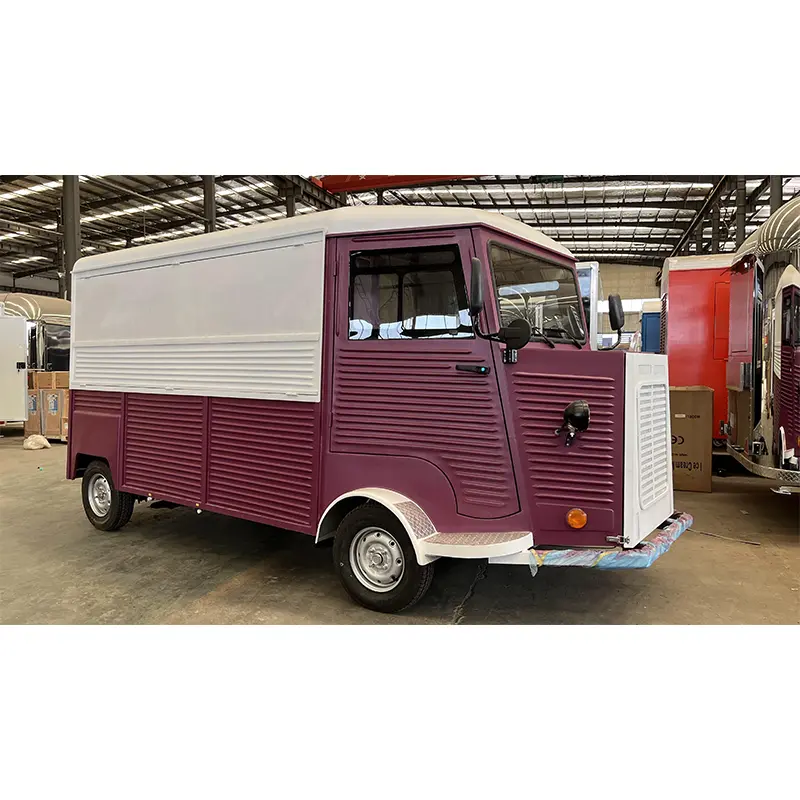
TUNE's Vintage H-Van Style Food Truck is a custom mobile kitchen vehicle built for operators who want a strong visual identity without giving up the working functions of a commercial kitchen. The corrugated exterior, rounded front details, and two-tone finish create a classic European appearance, while the interior focuses on sanitation, storage, service access, and utility management. TUNE manufactures this retro food truck and mobile catering van in its Qingdao factory under ISO 9001 quality management. The vehicle is exported to customers in North America, Europe, Australia, and other markets, with US DOT and EU CE compliance information available for the relevant configuration.
The CTT-TN48 has an independent driver cab with dual leather seats and a rear kitchen area. This separation gives the driver a defined operating position and allows the commercial kitchen to be arranged around preparation, cooking, and customer service. Large side and rear hatches can be opened during business hours and secured for transportation.
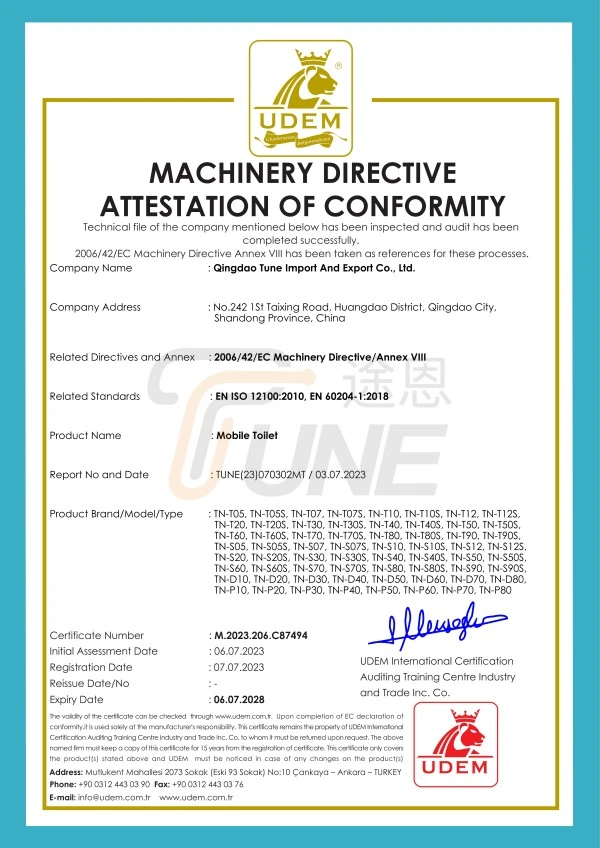
TUNE manufactures this Citroen H Van food truck under ISO 9001 quality management. US DOT and EU CE documentation can be provided for the completed vehicle and selected electrical system, based on the final configuration and destination market. Third-party inspection by SGS or Intertek can be arranged before shipment. Each vehicle passes through a documented inspection process covering the chassis, body, water system, electrical system, and service hatches.


The Citroen catering van is designed for operators who want a distinctive mobile food concept with a classic European appearance. The CTT-TN48 has an independent driver cab with dual leather seats and a rear kitchen area. This separation gives the driver a defined operating position and allows the commercial kitchen to be arranged around preparation, cooking, and customer service. Large side and rear hatches can be opened during business hours and secured for transportation.


|
Item |
Specification |
|
Model |
CTT-TN48 |
|
Overall Dimensions |
4,800 × 1,900 × 2,500 mm |
|
Approximate Imperial Size |
15.74 × 6.23 × 8.20 ft |
|
Stated Gross Vehicle Weight |
Approximately 1,300 kg |
|
Main Body |
Fiberglass and galvanized corrugated panels |
|
Interior Material |
304 stainless steel and galvanized sheet |
|
Axle |
Double reinforced heavy-duty axles |
|
Tire Specification |
185R14 commercial tires |
|
Drive System |
Electric drive with high-capacity battery pack |
|
Power Input |
110V / 220V / 240V / 380V |
|
Water System |
Double sink, pump, water heater and tanks |
|
Interior Lighting |
LED ceiling strips and exterior service lighting |
|
Standard Color |
Burgundy and white, or customized RAL color |
|
Compliance Information |
US DOT and EU CE stated for relevant configuration |
The final battery capacity, driving speed, range, axle load, brake system, tank volume, and equipment power should be verified in the final quotation. These values may change when refrigeration, cooking appliances, batteries, or customized body components are added.
The interior can be configured for several food and beverage concepts. A coffee operator may prioritize an espresso machine, grinder, water filtration, under-counter refrigeration, and cup storage. A dessert business may require crepe plates, waffle equipment, display refrigeration, and a larger service counter. A fast-food operator may instead need a fryer, griddle, exhaust hood, and hot-holding cabinet.
The two service hatches allow the operator to create separate service points. For example, the side opening can be used for ordering and payment, while the rear opening handles collection or beverage delivery. This is not a fixed operating rule. The final arrangement should reflect customer flow at the intended site.
The vehicle includes a complete basic water system with a clean-water tank, wastewater tank, 12V automatic pump, double sink, and instant electric hot-water tap. The reference hot-water adjustment range is approximately 30°C to 65°C. The operator should test the water temperature before opening and maintain the system according to the equipment manual.
The electrical cabinet supports multiple regional voltage options. Lighting, pumps, and low-wattage equipment may use the onboard battery system, while fryers, ovens, and large griddles generally require shore power or a properly sized external generator. Independent circuit breakers help separate different appliance circuits and simplify troubleshooting.
A typical manufacturing sequence is:
Design confirmation → Chassis preparation → Corrugated body fabrication → Anti-corrosion treatment → Interior stainless-steel installation → Water and electrical routing → Equipment fitting → 24-hour electrical burn-in → Water leakage testing → Road and safety inspection → Packaging
Attention should be paid to the areas that experience repeated use: hatch hinges, gas struts, door seals, floor drains, sink connections, electrical sockets, and under-counter storage doors. These details often influence daily convenience more than exterior decoration.
TUNE states that its Shandong facility covers approximately 4,500 square meters and has produced custom food trucks, food trailers, and mobile kitchens since 2015. The available quality process includes structural inspection, water testing, electrical insulation checks, and pre-shipment video inspection.


The Citroen food truck can be used for:
● Specialty coffee and bakery sales
● Gelato and dessert service
● Crepes, waffles and churros
● Burgers and street food
● Beer, cold drinks and cocktails
● Hotel and resort events
● Wedding and private catering
● Brand promotion and exhibition service
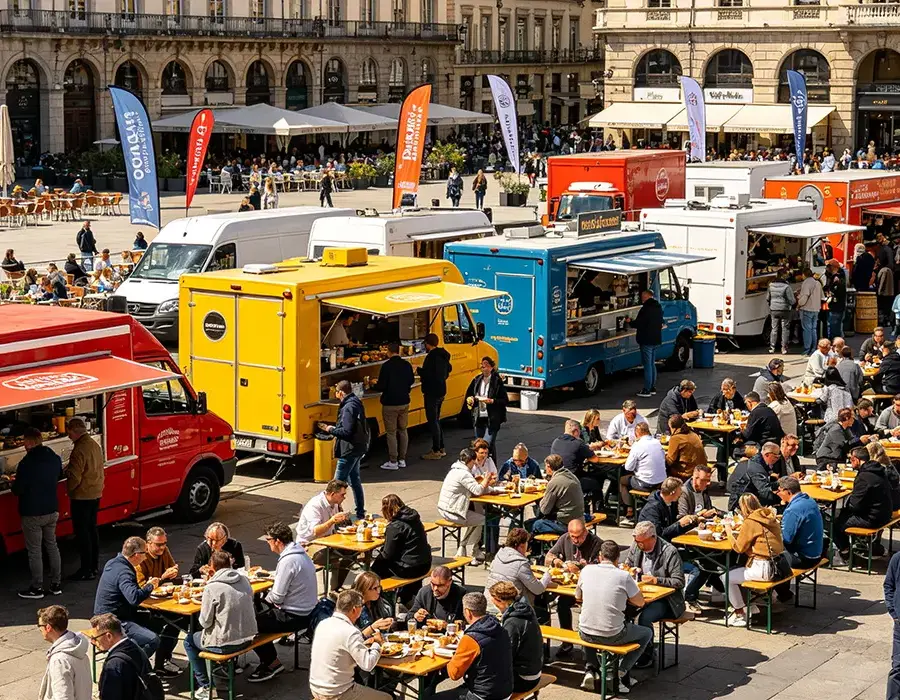
It is especially suitable for locations where appearance, customer interaction, and flexible repositioning are important, such as beachfront promenades, pedestrian areas, festivals, and resort grounds.
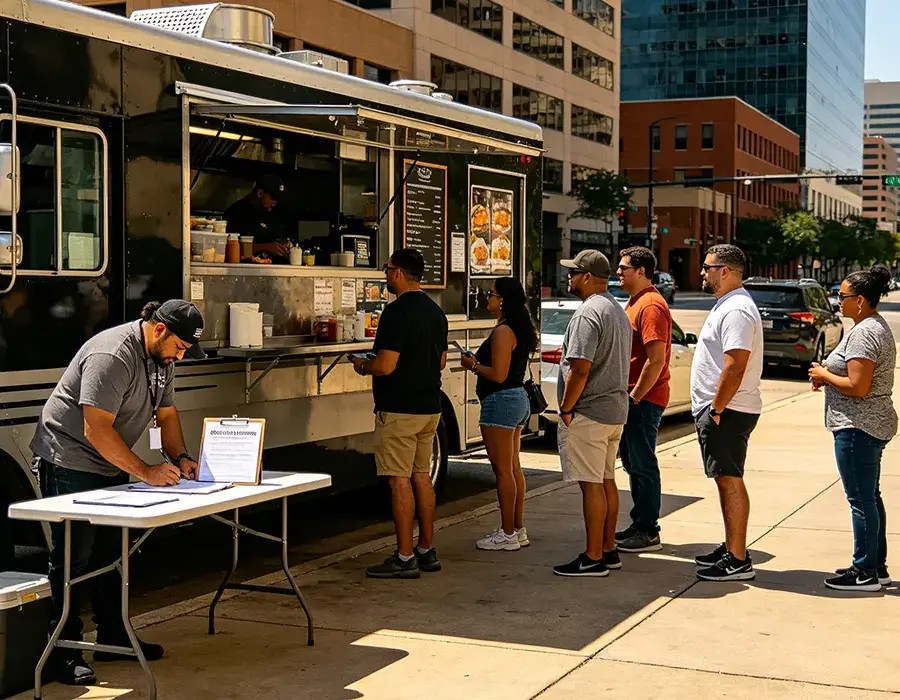
When arriving at the site, the operator should:
1. Park on a stable surface and secure the vehicle.
2. Open the selected service hatches and inspect the gas struts.
3. Connect the correct shore-power cable if high-power appliances are used.
4. Switch on the distribution cabinet and check individual circuits.
5. Fill the clean-water tank and inspect the drainage route.
6. Start the pump and test both sinks.
7. Allow refrigeration equipment to reach the required temperature.
8. Turn on ventilation before operating heat-producing appliances.
9. Keep the service counter clear and separate clean and used utensils.
10. Shut down appliances, clean the worktops, and drain the system after service.
Regular inspection helps maintain the vehicle in reliable working condition. Check hatch hinges, gas struts, and door seals for wear. Clean floor drains and sink connections after each service period. Inspect electrical sockets and under-counter storage doors for loose fittings. The corrugated exterior should be cleaned with mild detergent to preserve the paint finish.
The water system should be flushed after extended storage. The battery pack should be charged according to the manufacturer's instructions. High-power appliances should be operated only on approved circuits. Any electrical, gas, or refrigeration maintenance should be handled by qualified personnel.
Yes. TUNE can prepare 2D or 3D layout drawings showing the positions of cooking equipment, refrigeration, sinks, outlets, storage, and service counters before production.
They can be installed, but the power supply must be planned in advance. Fryers, pizza ovens, and large griddles may require 220V, 240V, 380V, or an external generator depending on their rating.
No. The onboard tanks and pump support temporary operation without a direct city-water connection. The clean-water and wastewater capacities should be selected according to the expected number of users and operating hours.
The provided reference information indicates approximately 40–50 km per charge and a maximum speed of about 35–45 km/h. Actual performance varies with load, road conditions, temperature, driving habits, and auxiliary power use.
The vehicle can be prepared with technical information for the confirmed destination market. Local registration, health permits, road approval, and electrical inspection must be completed according to the requirements of the operating country or city.
TUNE can provide US DOT and EU CE documents for the completed vehicle and selected electrical system, based on the final configuration and destination market. ISO 9001 applies to the manufacturing process. Third-party inspection by SGS or Intertek can be arranged.
A commercial order should clearly list the model, body finish, battery system, kitchen equipment, electrical voltage, tank arrangement, delivery method, and inspection requirements. TUNE provides electrical diagrams, water-system instructions, operation guidance, remote technical support, and assistance with common replacement parts. The standard structural warranty stated in the file is 12 months, while the terms for purchased appliances should be confirmed separately.
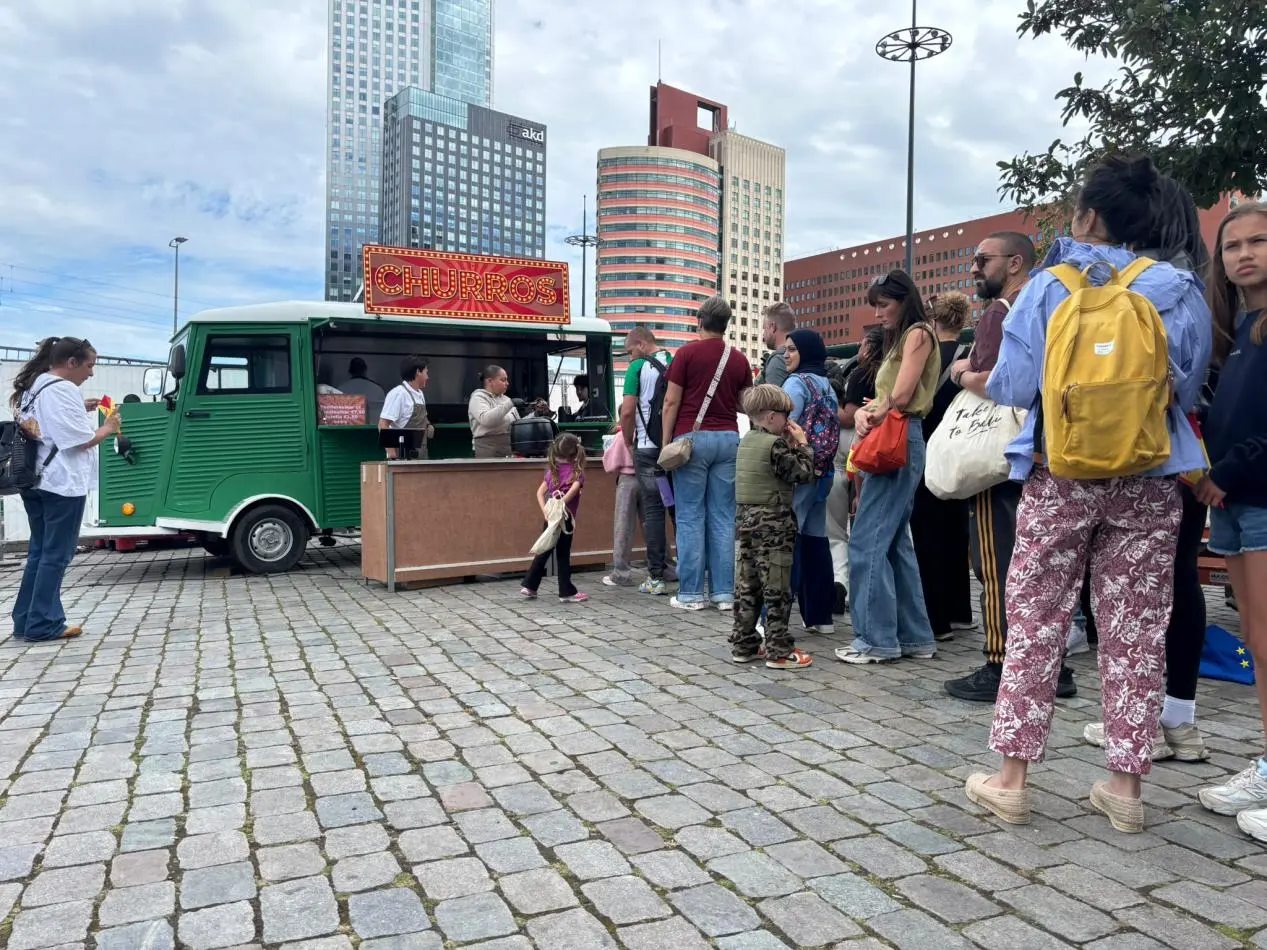
● Model: Vintage H-Van Style Food Truck (Citroën Type H Wave-Panel Design)
● Operating Location: Urban Plaza & Harbor Festival, Rotterdam, The Netherlands (Europe)
● Core Concept: Artisanal Spanish Churros & Warm Chocolate Bar
● Exterior Finish: Emerald Green Corrugated Steel Body with Polar White Roof & Marquee Sign Canopy
Operating a high-throughput fried pastry (Churros) setup in a high-density European plaza comes with specific operational and health code requirements:
Churro fryers require rapid temperature recovery between batches to keep up with continuous queue lines. The vehicle interior was custom-fitted with heavy-duty 304 stainless steel splashbacks, an integrated commercial ventilation hood system, and dual 230V circuits with independent circuit breakers to safely power heavy fryers, sugar dispensers, and chocolate warmers simultaneously.
To handle long customer queues during peak afternoon city festival hours, the operators combined the main hydraulic side serving window with a wide, standalone wooden auxiliary front counter. This setup creates a dedicated pickup area, keeping hot frying equipment safely out of reach while letting three staff members work concurrently (fryer operator, sugar/dip decorator, and cashier).
Many European city councils require mobile vendors to match local architectural character. The corrugated retro H-Van profile, complete with vintage-style glowing marquee lettering (“CHURROS”), provides instant visual recognition while fully complying with European street vending aesthetic guidelines.
Customer Rating: 5.0 / 5.0 Stars
Verified Owner: Commercial Concession Operator
Deployment Region: Netherlands / Western Europe
"We deployed the Vintage H-Van Style Food Truck for city square pop-ups and coastal food festivals across Europe. Our primary requirement was high thermal capacity inside the kitchen combined with a vintage look that draws foot traffic naturally.
The vehicle arrived fully assembled via ocean shipping, with all corrugated steel panels, window hydraulic struts, and internal stainless steel counters in pristine condition. The green and white exterior finish is durable and resists weathering even under rain and salty harbor winds.
In daily operation, the kitchen layout handles high heat effortlessly. The stainless wall panels clean up easily after oil splatters, and the built-in floor drain makes end-of-shift washdowns fast and hygienic. During busy weekend events, the wide serving hatch and front counter allow our team to keep lines moving smoothly without bottlenecking. It is a solid, commercial-grade vehicle built for heavy daily service."
Address
No. 1667, Shuicheng Road, Huangdao District, Qingdao City, Shandong