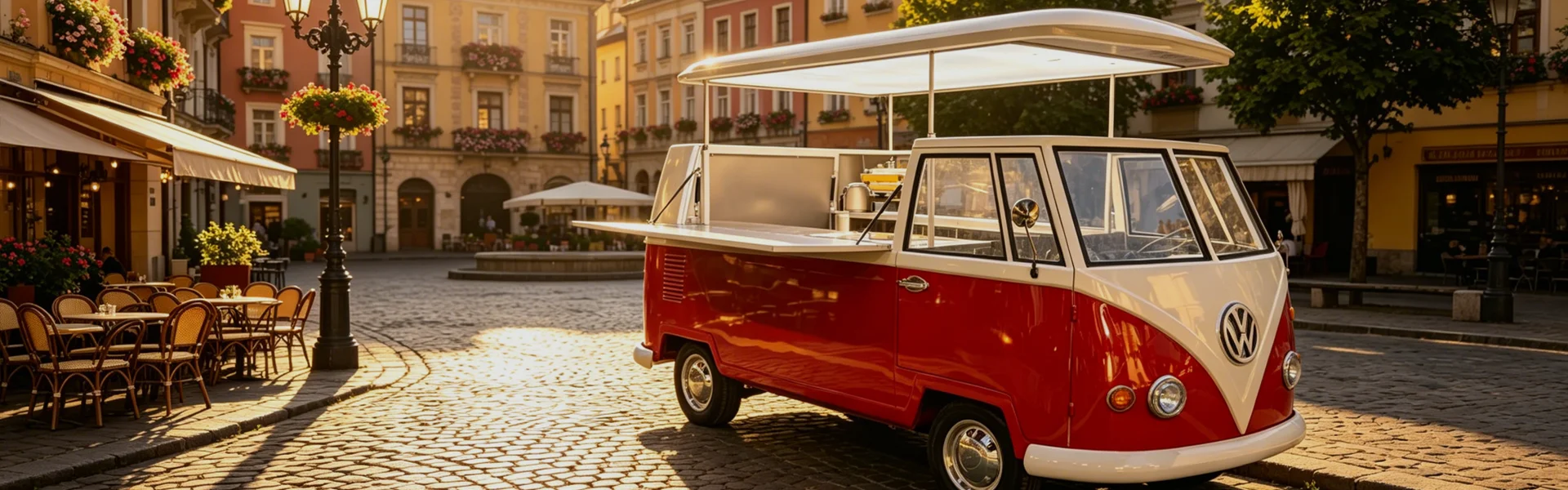
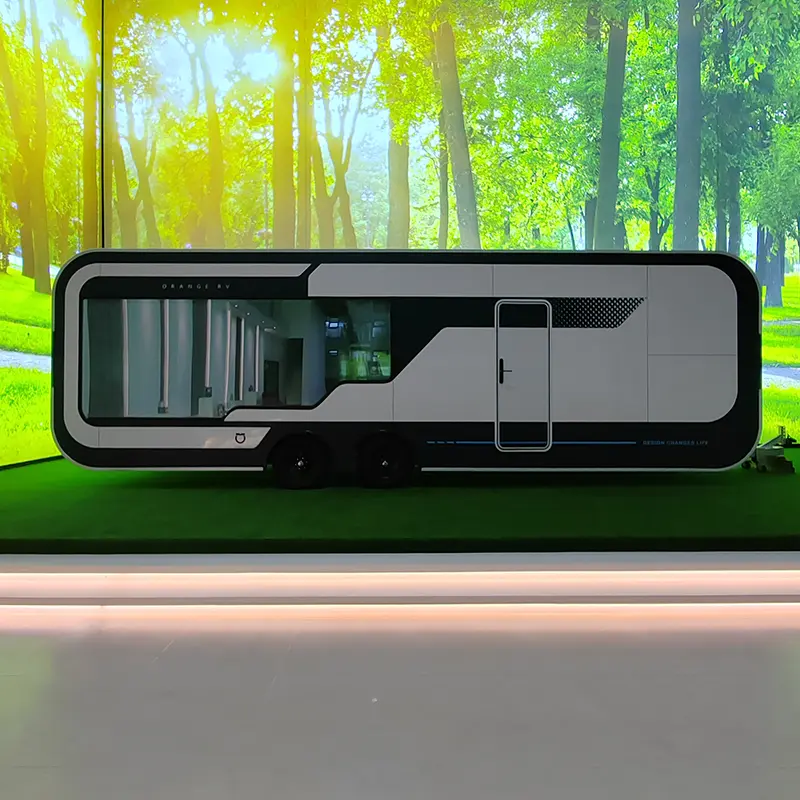
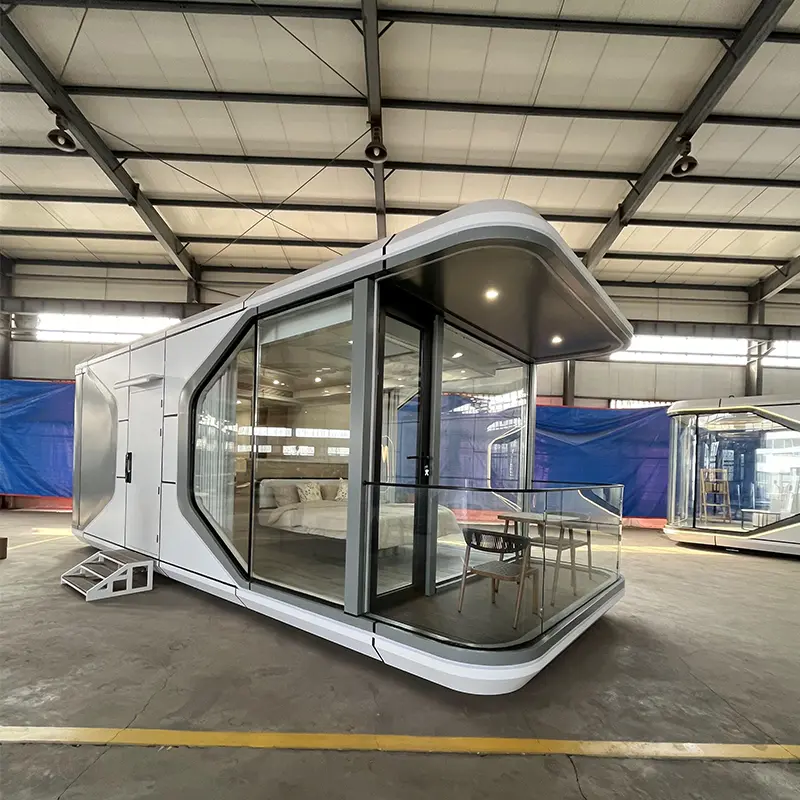
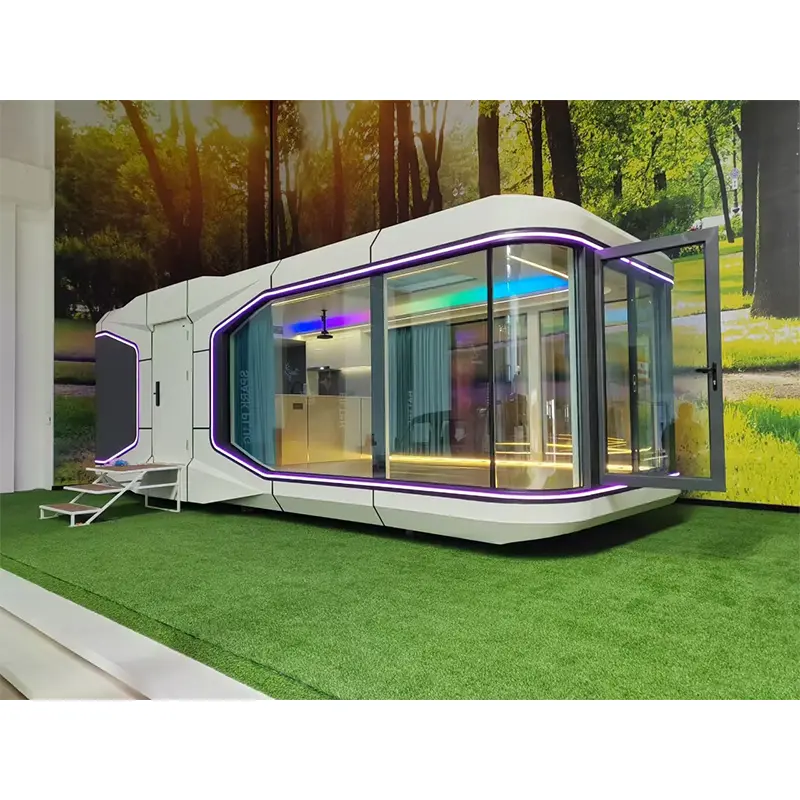
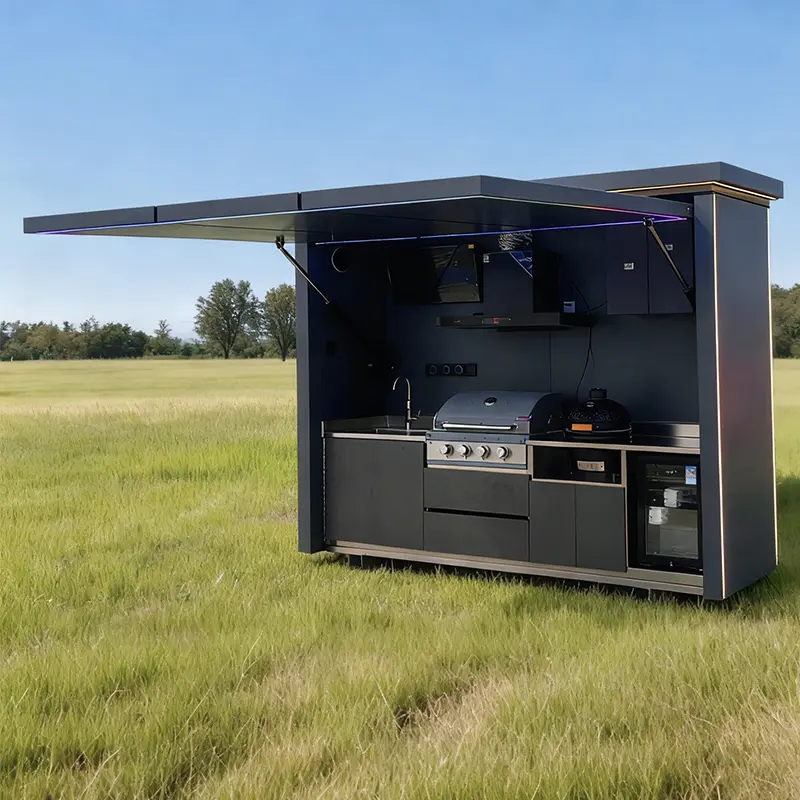
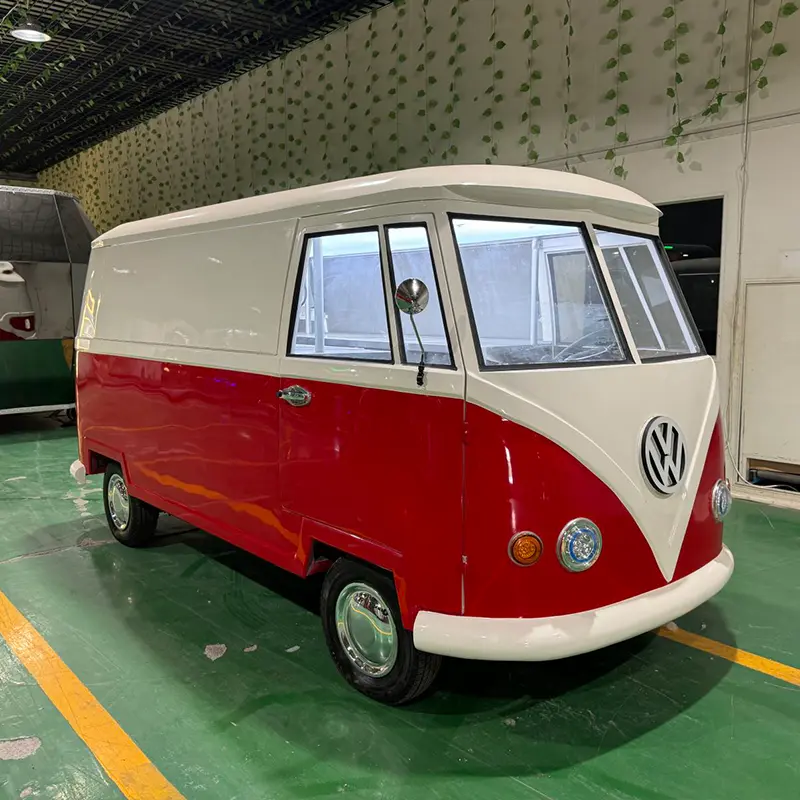
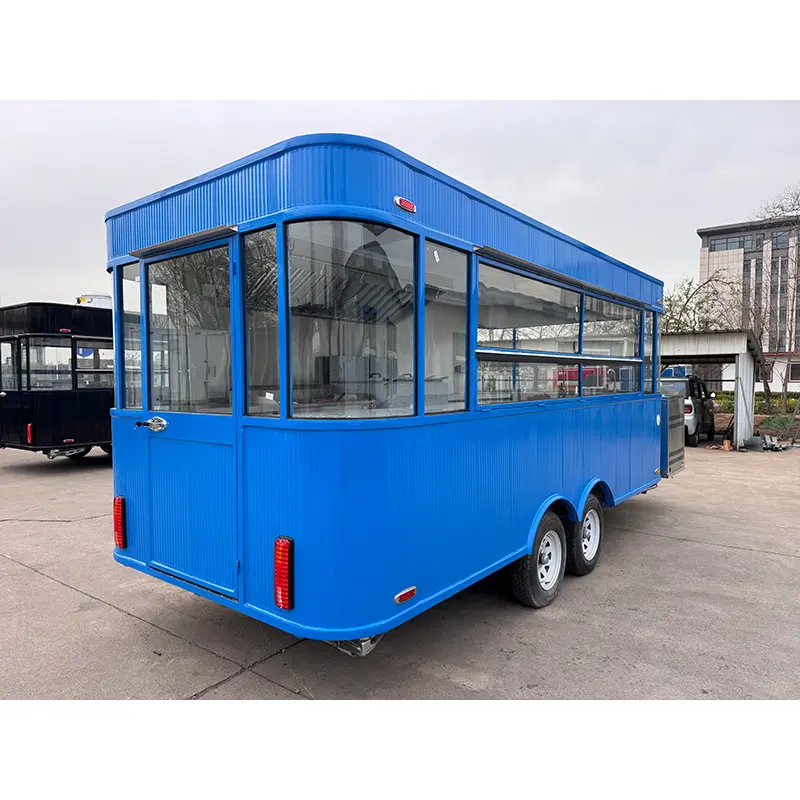
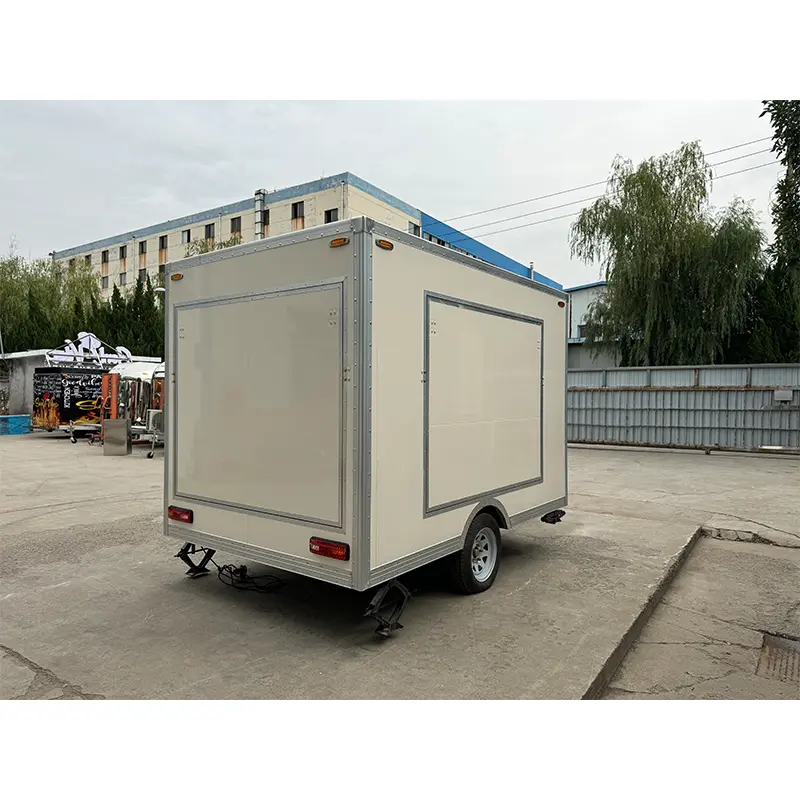
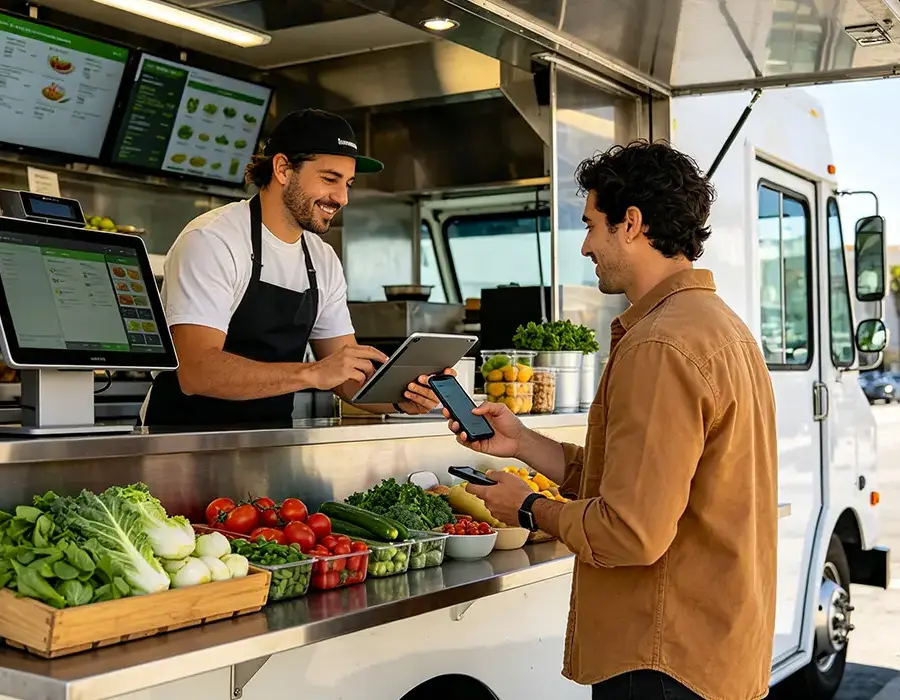
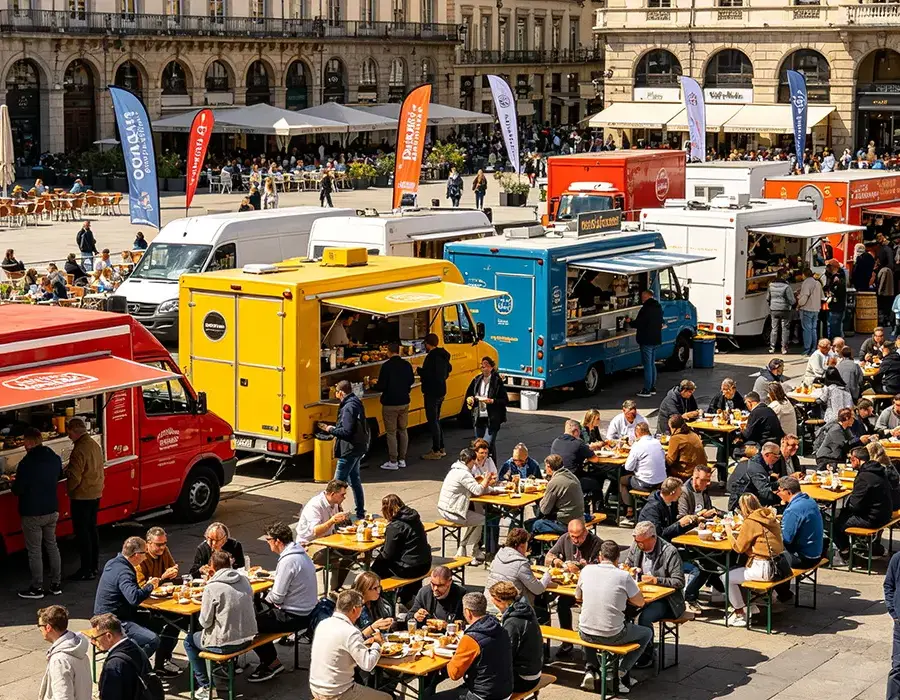
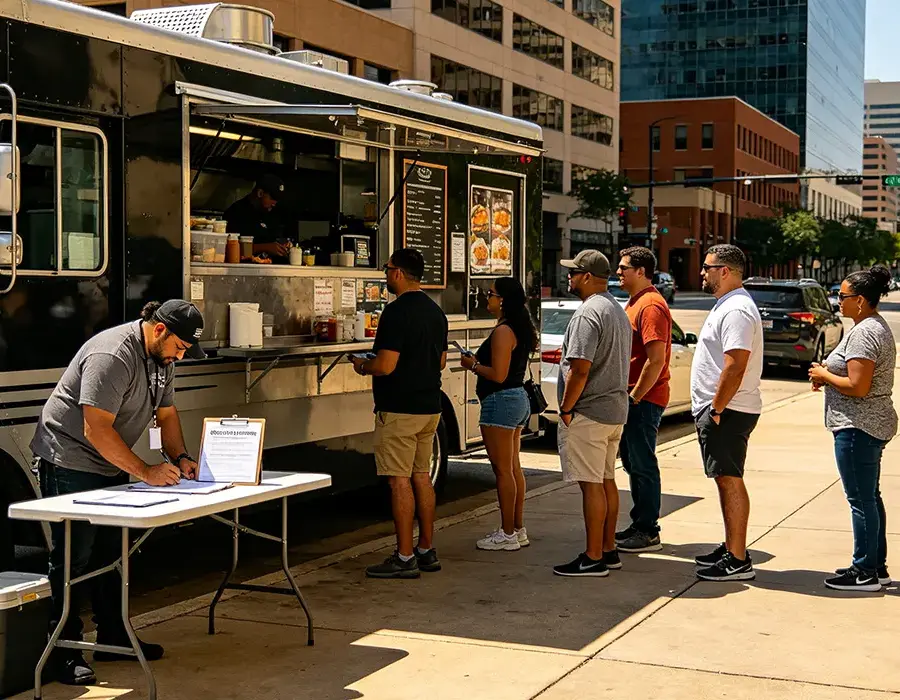
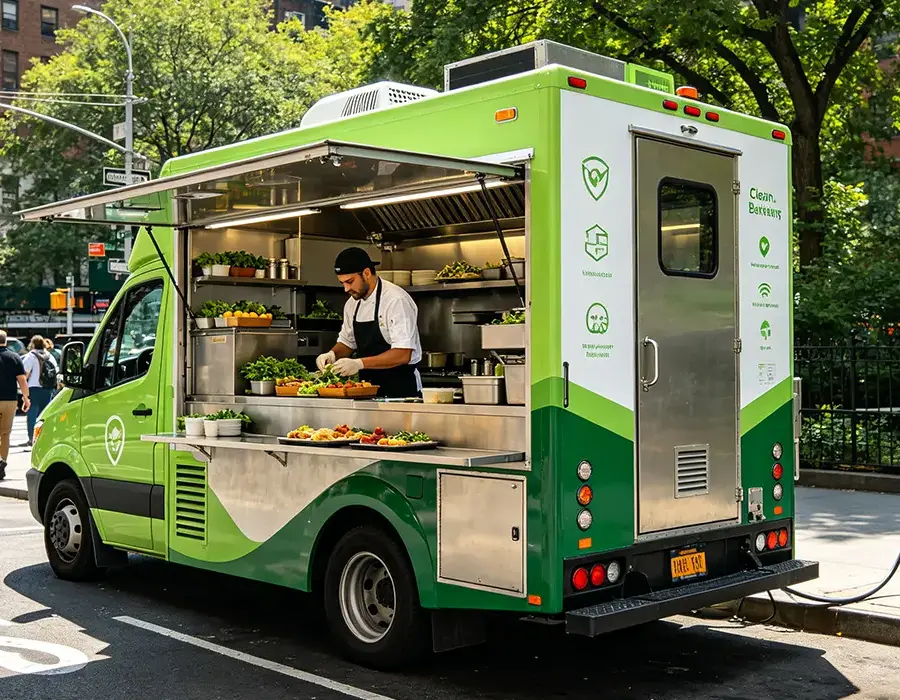
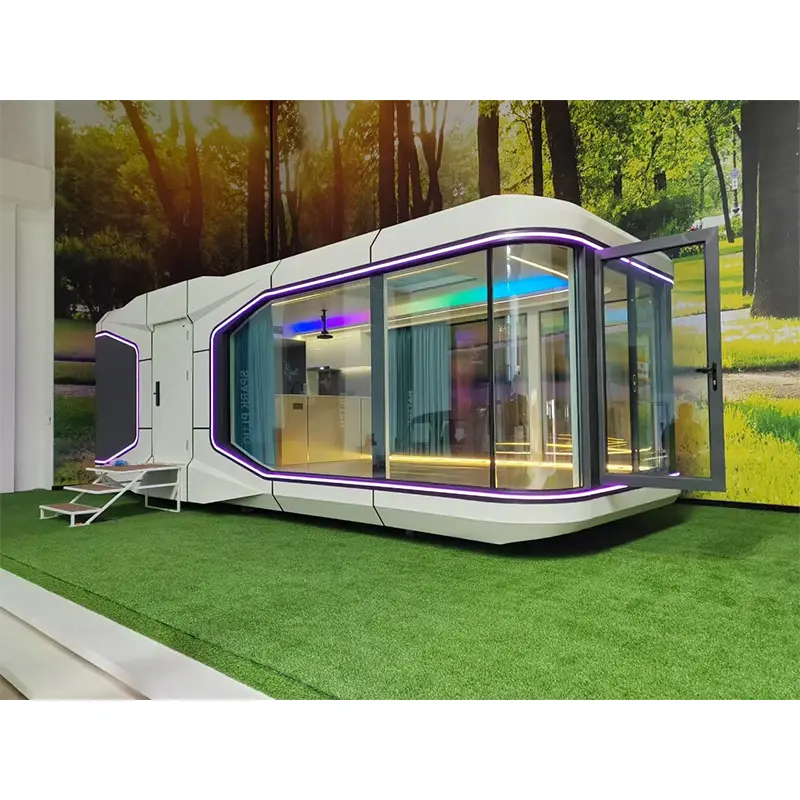
Qingdao Tune Technology Co., Ltd. builds custom Commercial Mobile Concession Trailers at its 4,500-square-meter production site in Shandong, China. This category covers units that do not fit the standard square, round, Airstream, mailbox, or vessel profiles. Typical projects include draft beer trailers, multi-window concession units, bakery trailers, and specialty builds with non-standard equipment layouts. Each unit uses a galvanized steel chassis, food-grade 304 stainless steel interior, insulated wall panels, and shore power hookups. Standard profiles are grouped under Food Trailer, while self-propelled units fall under Food Truck.
Custom Layout and Weight Distribution
Custom trailers are designed around the customer's equipment list rather than a fixed template. Layouts can include dual-zone refrigeration, wood-fired ovens, draft keg storage, or specialized display windows. Because the weight of these items varies, the engineering team uses CAD/CAM stress modeling to calculate the center of gravity before the chassis is built. This determines whether the trailer needs a single, tandem, or triple axle configuration and where the axles should sit relative to the load. Getting this right matters for towing stability at highway speed.
Chassis and Corrosion Protection
The subframe is built from 100 x 50 x 3.0 mm cold-formed rectangular hollow structural steel tubing with cross-member bracing. The complete subframe is hot-dip galvanized to ASTM A123, which gives an 80+ micron zinc coating inside and outside the tubing. This protects the frame from road de-icing chemicals, gravel, and atmospheric humidity. Coastal festivals, wet outdoor markets, and winter venues are common operating conditions for these trailers, so the galvanized frame is standard rather than an option.
Draft Beer and Cold Chain Builds
Draft beer and cider trailers use reinforced subfloor steel joists rated for keg loads above 500 kg. The dispensing system can include insulated glycol cooling lines, multi-tap stainless draft towers, drip trays with pressurized glass rinsers, and commercial keg coolers. These trailers are built so draft beverages stay at serving temperature during long outdoor shifts. The same subframe reinforcement is used for other heavy equipment, such as large refrigerated display cases or dual-zone freezer rooms.
Service Windows
Multi-window layouts are common in this category. They allow staff to separate ordering, payment, and pickup, which reduces queue time at busy events. Each opening uses pneumatic top-hinged hatches supported by dual 300N gas struts and continuous automotive-grade EPDM rubber seals. When closed for the night, the hatches lock down into a weather-sealed enclosure. Window placement is planned around the menu, the equipment positions, and the direction customers approach from.
Insulation
Walls and ceiling use multi-layer sandwich panels with a 50 mm core of flame-retardant polyurethane or XPS foam. Thermal conductivity is rated at λ ≤ 0.024 W/m·K. The core sits between an outer skin and an inner stainless liner. This reduces heat gain in summer, limits condensation on interior metal surfaces, and reduces the load on the air conditioner or heater during long shifts.
Electrical System
Each unit has an IP67 weather-sealed distribution panel with a 30mA residual current device and individual miniature circuit breakers for separate appliance circuits. Copper wiring runs through rigid PVC conduits to 110V, 220V, 240V, or 380V industrial CEE shore inlets. This allows griddles, espresso machines, cooling compressors, and lighting to run at the same time without thermal trips. Generator and solar preparation are available for sites without shore power.
Water and Sanitation
Plumbing uses NSF-approved food-grade PEX-B piping connected to dual 100L to 150L polyethylene freshwater and greywater tanks with electronic fluid sensors. A 12V demand diaphragm pump delivers 4.5 GPM at 50 PSI. The wash station includes a 3-compartment or 4-compartment 304 stainless steel sink with an under-counter grease interceptor and an instant electric water heater providing water up to 65°C for utensil sanitizing.
Ventilation
Cooking zones use 304 stainless steel exhaust canopies with removable baffle grease filters. A top-mounted variable-speed centrifugal blower rated above 1,200 CFM extracts grease particles, smoke, and heat. Low-velocity intake vents in the side bulkheads maintain balanced internal pressure, which reduces backdrafts and keeps the cabin temperature stable during long cooking shifts.
Interior Surfaces and Floor
Interior walls, ceiling curves, splash zones, and countertops are clad in 1.0 mm food-grade 304 stainless steel with coved joints. The floor combines marine-grade plywood underlayment with an anti-slip heavy-gauge aluminium checkerplate top layer and integrated drain plugs. These surfaces are designed for end-of-day wash-down and reduce the chance of food particles collecting in seams.
Testing and Warranty
Before shipment, each trailer goes through a 30-minute deluge test in an environmental chamber. High-pressure water at 35 PSI targets service hatches, doors, and roof seams to check for leaks. Electrical systems undergo insulation resistance testing, and water lines are pressure-tested. Each unit receives a 17-digit VIN on the drawbar, along with electrical schematics and CE homologation documents. TUNE provides a 12-month structural chassis warranty and international spare parts support.
Certifications and Third-Party Inspection
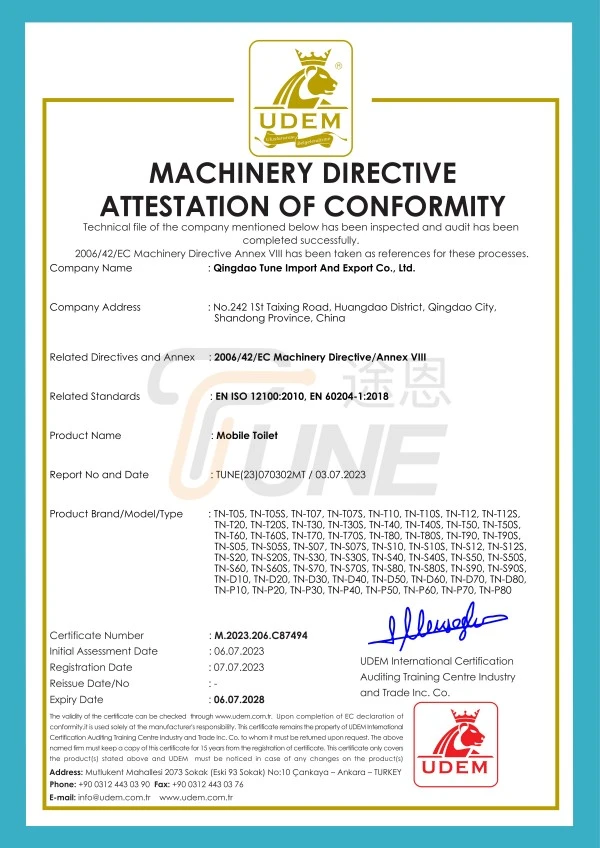
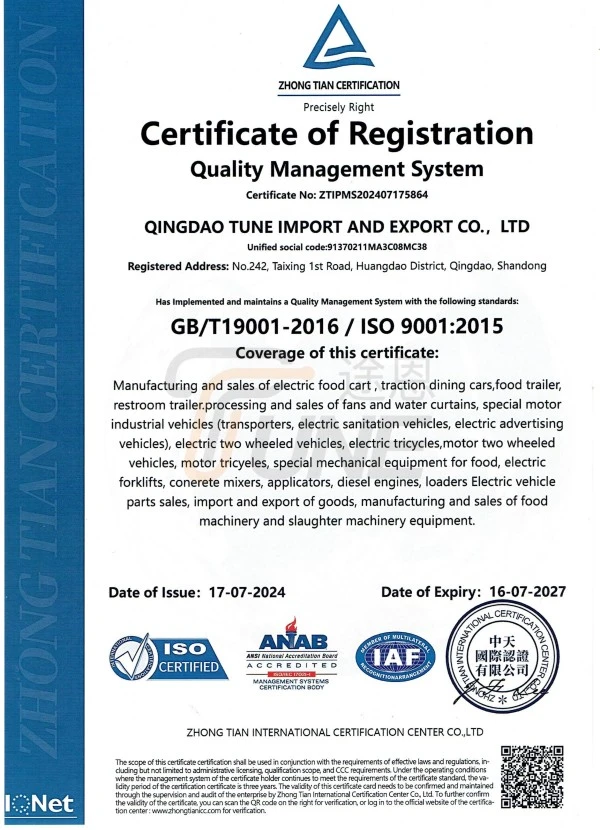
Custom trailers in this category can be supplied with CE, ISO 9001, DOT, EPR, COC, and NSF-aligned documents where required. TUNE holds Alibaba Gold Supplier status and has completed regular third-party inspections by SGS and Intertek. Certificate numbers, scope, and validity can be provided before ordering.
FAQ
Q: When should I choose a custom build instead of a standard profile?
A: When the equipment list does not fit a standard layout, or when the trailer needs draft keg storage, dual-zone refrigeration, wood-fired ovens, or a specific window arrangement. Custom builds are quoted from your equipment list and site conditions.
Q: How is towing stability calculated for non-standard loads?
A: The engineering team models the load in CAD and calculates the center of gravity before the chassis is built. This sets the axle count, axle position, and frame reinforcement. A trailer with a heavy keg room, for example, may need a different axle layout than one with light display equipment.
Q: What lead time should I expect?
A: Lead time depends on size, equipment, and finish. After drawings and deposit are confirmed, most custom builds take several weeks to a few months. The exact schedule is written into the order.
Q: Can the trailer be used for both food and beverages?
A: Yes. Some units are built as dual-purpose trailers with a cooking line on one side and a draft or cold beverage station on the other. The layout and power panel are sized for both loads.
Q: What after-sales support is included?
A: TUNE offers a 12-month structural chassis warranty, remote technical support, and shipment of common spare parts such as water pumps, faucets, breakers, and door seals. Specific terms are stated in the contract.