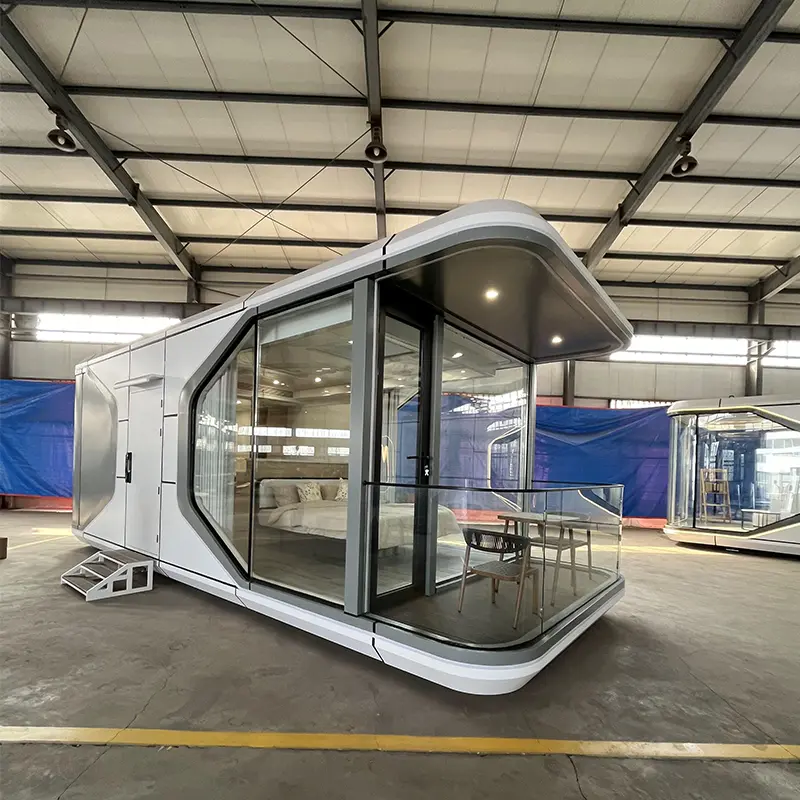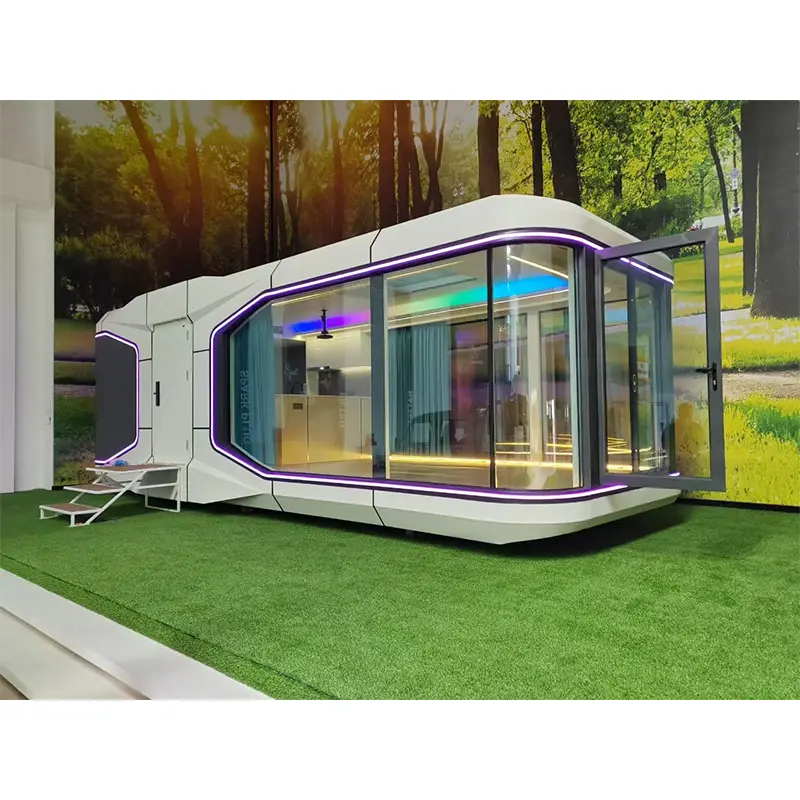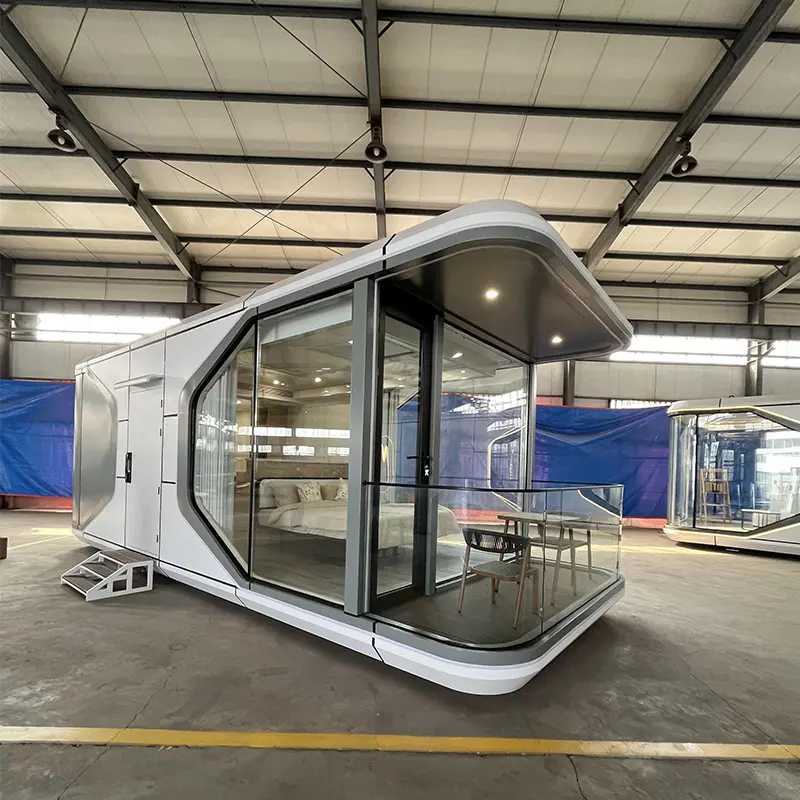
For resort developers, campsite operators, and hospitality investors seeking distinctive guest accommodation, TUNE offers the K7 Space Capsule Pod with Balcony as a modern modular lodging solution. Combining panoramic glazing, a dedicated outdoor relaxation area, and practical interior facilities, this innovative pod helps create memorable stays while supporting flexible site planning and efficient project development.
The K7 Space Capsule Pod with Balcony brings together contemporary architecture, functional indoor living, and an inviting outdoor extension. Designed for hospitality projects that value both comfort and visual appeal, this prefabricated accommodation unit features a galvanized steel frame, an aluminum alloy exterior, insulated glazing, a private bathroom, and an integrated kitchen area. Optional smart controls, climate systems, and heating equipment allow buyers to adapt the configuration to different environments. This guide explores the model's key features, reference specifications, practical applications, customization options, and purchasing considerations to help project owners assess whether it suits their accommodation plans.
Modern accommodation projects compete not only on room comfort but also on the experiences they offer. Guests increasingly appreciate private outdoor spaces, distinctive architecture, and convenient amenities. The balcony version of the K7 addresses these priorities by combining a compact indoor living environment with a dedicated space for enjoying the surrounding landscape.
A balcony creates a natural extension of the guest room. Depending on its final dimensions and approved load capacity, it can accommodate outdoor chairs, a small table, or decorative plants. Guests can enjoy morning coffee, read a book, or appreciate a scenic view without leaving their accommodation.
The streamlined capsule silhouette, broad glazed surfaces, and aluminum alloy balcony give the unit a contemporary appearance. This design can complement mountain retreats, lakeside resorts, forest campsites, and other destinations where architecture contributes to the overall guest experience.
Prefabricated accommodation can help project teams coordinate manufacturing, transportation, and on-site preparation. Instead of managing every interior component as a separate construction task, buyers can plan around an integrated unit. Actual installation time depends on the foundation, utilities, transport access, local approvals, and the selected configuration.
Each unit can be oriented toward a preferred view or arranged to improve privacy between neighboring rooms. Thoughtful placement may help operators establish premium accommodation zones, create quieter guest areas, and make better use of the available land.
The K7 is designed to balance appearance with everyday accommodation functions. Before selecting a configuration, buyers should understand how the structural components, interior layout, and optional equipment contribute to the finished unit.
The reference configuration uses a galvanized steel frame and a fluorocarbon-coated aluminum alloy exterior shell. The envelope is designed with insulation, waterproofing, and moisture resistance in mind. These elements are important for accommodation installed outdoors, where exposure conditions can vary significantly by location.
Hollow tempered glass windows and a hollow laminated tempered glass skylight are also listed for the model. Buyers operating in hot, cold, humid, or coastal environments should confirm the glazing specification, insulation thickness, corrosion protection, and weather-resistance details before ordering.
The reference layout combines several essential functions within one integrated space:
Depending on the selected package, the unit can be equipped with smart locks, intelligent voice control, electric curtains, air conditioning, an electric water heater, a fresh-air system, and electric floor heating. A skylight and shade system may also be included in the final design.
These options should be matched to the destination climate and operating requirements. For example, heating capacity and pipe protection deserve attention in cold regions, while solar heat gain, ventilation, and cooling performance are important in warmer climates.
Technical specifications provide a starting point for comparing accommodation models, estimating transport requirements, and preparing site plans. The following table summarizes the reference information published for the K7 balcony version. Final values should be confirmed against the approved quotation and technical drawings.
| Parameter | Reference Specification | Buyer Consideration |
|---|---|---|
| Product name | K7 Space Capsule Pod with Balcony | Confirm the exact balcony configuration. |
| Brand | TUNE | Request the final model documentation. |
| External dimensions | Approximately 11,400 × 3,300 × 3,300 mm | Check transport clearance and foundation layout. |
| Building area | Approximately 37.7 m² | Confirm the area calculation and usable interior space. |
| Occupancy | 2–4 people | Verify the approved occupancy for the intended use. |
| Reference net weight | Approximately 8 tons | Plan lifting, transport, and foundation capacity. |
| Main frame | Galvanized steel | Review structural details and corrosion protection. |
| Exterior shell | Fluorocarbon aluminum alloy | Confirm coating and panel specifications. |
| Glazing | Hollow tempered glass | Check thermal, acoustic, and safety requirements. |
| Bathroom | Toilet, shower, washbasin, and mirror | Confirm sanitary fittings and plumbing connections. |
| Water heater | 80 L option available | Confirm availability and hot-water demand. |
| Heating and cooling | Optional air conditioning and electric floor heating | Match equipment capacity to the local climate. |
| Customization | Supported | Approve drawings before production. |
| Warranty | One year, according to the product information | Obtain written coverage and exclusions. |
Note: Specifications are reference values, not a substitute for a signed technical specification. Dimensions, equipment, balcony details, and included accessories may vary with customization and destination-market requirements.
The combination of an integrated interior and outdoor balcony makes this model worth considering for projects where guests value both private accommodation and access to the surrounding environment.
In scenic destinations, the balcony can provide a private place to appreciate mountain views, forest surroundings, or changing weather. Positioning each unit toward a specific landscape feature can help create a more individualized guest experience.
Operators can use capsule accommodation to offer an alternative to tents and conventional cabins. A private bathroom, climate-control options, and an outdoor sitting area may appeal to guests who want closer contact with nature without giving up indoor amenities.
A balcony can be valuable for viewing water, enjoying fresh air, or relaxing between activities. In coastal environments, however, buyers should pay particular attention to salt exposure, wind loads, drainage, and corrosion-resistant components.
For established hospitality businesses, prefabricated pods may provide a way to expand room capacity in planned phases. Site density, guest circulation, emergency access, utility connections, and local planning permissions must be considered before adding units.
Depending on local regulations, the unit may also be considered for private leisure accommodation or a garden retreat. Buyers should verify land-use restrictions and building requirements rather than assuming that a prefabricated structure is exempt from approval.
Every accommodation project has different priorities. A resort focused on year-round operation may need more substantial climate-control provisions, while a seasonal glamping site may prioritize views, outdoor seating, and straightforward maintenance.
When discussing customization with TUNE, buyers can evaluate the following areas:
Customization should be finalized before manufacturing begins. Changes to the balcony, door location, glazing, or interior equipment can affect structural coordination, shipping dimensions, installation planning, and total project cost.
Even a well-designed prefabricated pod requires careful site preparation. The buyer, supplier, transporter, and installation team should coordinate their responsibilities before delivery.
Routine inspection helps identify minor issues before they disrupt guest stays. A suitable maintenance schedule may include:
Balcony use should remain within the approved occupancy and load limits. Outdoor furniture should be suitable for the local climate, and emergency routes must remain clear. A defined maintenance plan is particularly important for commercial accommodation with frequent guest turnover.
Comparing suppliers on the basis of the quoted price alone can leave important project costs unresolved. A more reliable purchasing process evaluates the complete configuration, delivery scope, technical documentation, and long-term operating needs.
Before confirming an order, request written answers to these questions:
Buyers should also calculate the broader project budget, including site preparation, foundations, transportation, lifting, utility connections, permits, landscaping, insurance, and ongoing maintenance. These expenses can materially affect the total investment even when the unit price is competitive.
For projects involving multiple units, a sample-unit review or a formal pre-shipment inspection plan can help confirm finish quality, equipment operation, and conformity with the approved drawings. Acceptance criteria should be documented in the purchase agreement.
It is a prefabricated accommodation unit that combines an integrated indoor living area with a dedicated outdoor balcony. The reference configuration includes sleeping, lounge, kitchen, and bathroom functions, with optional equipment available depending on the order.
The reference external dimensions are approximately 11,400 × 3,300 × 3,300 mm, with a listed building area of about 37.7 m². Confirm the final drawings and area calculation with TUNE before planning foundations or ordering furniture.
The reference occupancy is two to four people. The permitted number of guests for a specific project should be confirmed according to the final layout, furniture arrangement, fire-safety requirements, and local regulations.
Customization can be discussed with TUNE. Any changes must be evaluated against structural requirements, railing safety, drainage, transportation limits, foundation conditions, and applicable building regulations.
It may be configured for different climates using suitable insulation, air conditioning, heating, ventilation, and other options. Year-round suitability depends on the final thermal specification, local weather conditions, utility availability, and compliance with applicable requirements.
The reference design includes a kitchen area and a private bathroom. The exact appliances, cabinets, sanitary fittings, water heater, and other accessories should be listed in the final quotation to avoid misunderstandings about the supplied package.
Buyers should arrange the approved foundation, delivery access, lifting equipment, electrical supply, water and wastewater connections, and required permits. The installation team should also confirm lifting points, connection details, and site safety arrangements in advance.
The product information lists a one-year warranty. Buyers should request the written warranty terms, including coverage, exclusions, claim procedures, and the treatment of third-party equipment or consumable components.
The K7 Space Capsule Pod with Balcony offers a distinctive option for hospitality developers seeking to combine compact indoor accommodation with private outdoor relaxation. Its reference configuration brings together a galvanized steel frame, aluminum alloy exterior, panoramic glazing, an integrated kitchen area, a private bathroom, and optional smart and climate-control features. For the right site, these elements can support an attractive guest experience while providing a modular approach to accommodation planning.
Successful implementation depends on more than appearance. Buyers should verify the final technical specifications, balcony safety, site conditions, transport arrangements, utility requirements, and local approvals before committing to a project. A clearly documented configuration and coordinated installation plan can help reduce uncertainty and keep development decisions aligned with operational needs.
Planning a resort, glamping park, scenic-area lodge, or modular accommodation project? Explore the TUNE K7 Space Capsule Pod with Balcony and contact us to discuss your preferred layout, balcony configuration, climate-control requirements, and project specifications. TUNE can help you evaluate suitable options and prepare a proposal tailored to your site, budget, and accommodation goals.