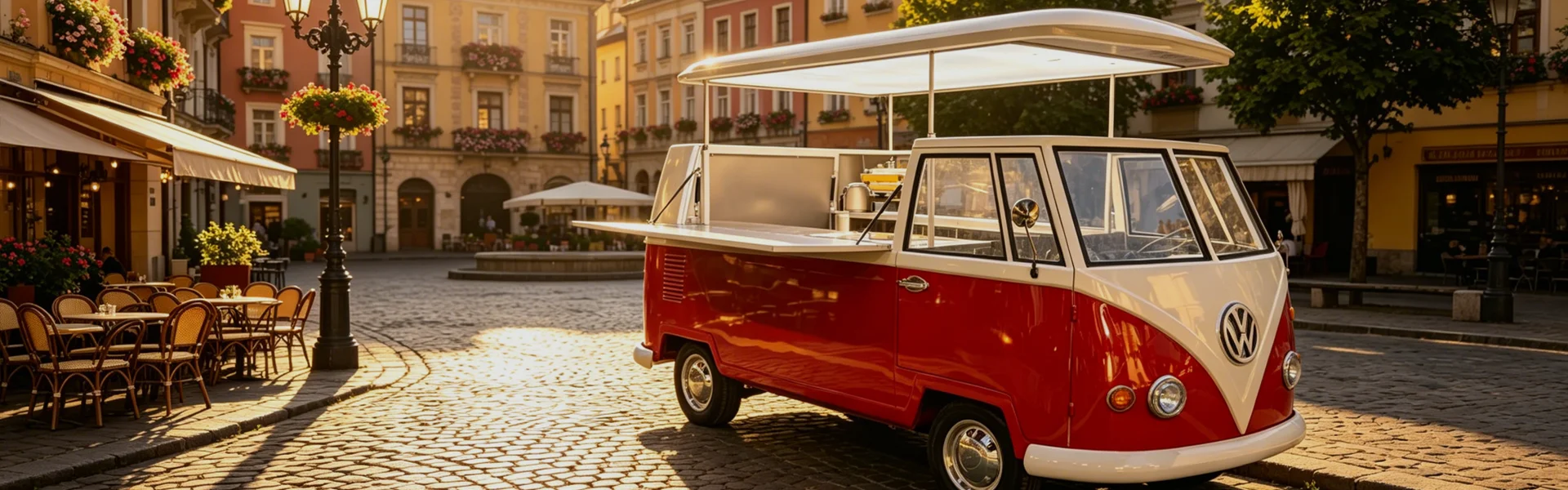
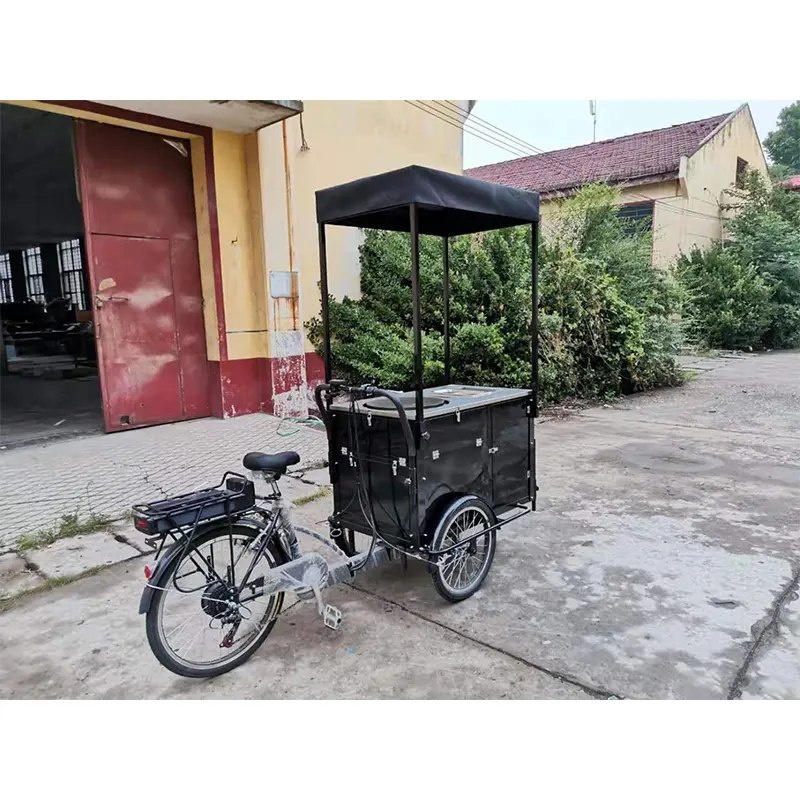
Qingdao Tune Technology Co., Ltd. builds Manual Food Bikes at its 4,500-square-meter production site in Shandong, China. This is a pedal-driven vending tricycle with no motor and no battery. It is used in parks, beach boardwalks, pedestrian shopping streets, and university campuses, including areas where motor vehicles and generators are restricted. Because it does not need charging, it stays in service as long as the rider can pedal. The frame carries a food-grade 304 stainless steel prep box and a passive cooling compartment. A motorized version with the same body style is available as Electric Food Bike, and larger non-motorized units with a different footprint are grouped under Food Cart.
Drivetrain and Gearing
The drive system uses a Shimano 7-speed or Nexus 8-speed internal gear hub with a 38T front chainring and a 1/2" x 1/8" rust-proof KMC chain. Internal gearing lets the rider keep a steady cadence on slopes while hauling up to 180 kg of total vehicle payload. Because the gear mechanism sits inside a sealed rear hub, there is no external derailleur to knock out of alignment, and maintenance is limited to periodic lubrication and chain tension checks. This design is common on rental fleets because it tolerates rough handling and infrequent servicing.
Cargo Box and Counter
The Pedal Powered Snack Food Bike uses a 2,200 mm length, 920 mm width, and 1,250 mm height. The front insulated container holds 750 liters and uses dual hinged top lids with hydraulic gas struts. The working counter is lined with seamless 304 stainless steel and includes napkin holders, condiment dispensers, and a fold-out side display shelf. The layout is arranged so one person can take orders, serve, and restock without leaving the counter position. The box height keeps the working surface at a comfortable level for standing service.
Brakes and Parking
Braking uses dual front 180 mm mechanical disc brakes and a 160 mm rear disc, controlled by dual-pull levers with integrated parking locks. When the bike stops on an inclined park trail or street corner, the handlebar parking lock holds all three wheels, so the bike stays in place during customer transactions. This matters on sloped boardwalks and park paths where a loaded tricycle would otherwise roll. The rotor size and brake lever ratio are selected for a fully loaded bike, not a standard bicycle.
Passive Cooling and Hygiene
The main storage compartment uses 40 mm high-density polyurethane foam at 42 kg/m³ with internal eutectic cold plates. The plates are frozen overnight and hold dairy, fruit, and beverages below 4°C for up to 10 hours without a battery or generator. The sanitation cabinet holds twin 12L food-grade polyethylene freshwater and wastewater tanks connected to a foot-operated mechanical diaphragm pump and a stainless steel handwashing sink. This setup is self-contained and does not rely on grid power, which is useful at sites without electrical access.
Frame and Surface Treatment
The load-bearing frame is fabricated from 6061-T6 aluminum alloy and TIG-welded 4130 chromoly steel tubing, built with a low center of gravity. After assembly, the frame goes through a multi-stage zinc-phosphate immersion wash followed by a baked thermosetting powder coat. This resists rust, aluminum oxidation, and chemical degradation from salt air and acidic beverage spills. The combination of aluminum and chromoly keeps weight down while maintaining rigidity under daily cargo loads. The frame geometry is designed to distribute weight evenly across all three wheels.
Where Manual Food Bikes Are Used
Snack vendors use the bike in historic city centers, pedestrian shopping streets, and botanical gardens where motor vehicles and generators are banned. Campus dining services place fleets around sports fields and student unions during lunch hours to reduce food court congestion. Resort venues use them along beach promenades for popsicles, chilled drinks, and snacks. The silent operation and zero tailpipe emissions allow placement in noise-sensitive and emission-restricted zones.
Testing and Warranty
Before crating, each bike completes a 20 km track test under a 180 kg payload to check gear shifting, braking distance, and steering alignment. Passive cold-plate compartments undergo a 12-hour thermal leakage test, and plumbing lines are hydrostatically pressure-audited. After approval, the bike is partially knocked down, wrapped in protective foam, and packed in steel-reinforced export wooden crates. TUNE provides a 12-month structural factory warranty and assembly manuals.
Certifications and Third-Party Inspection
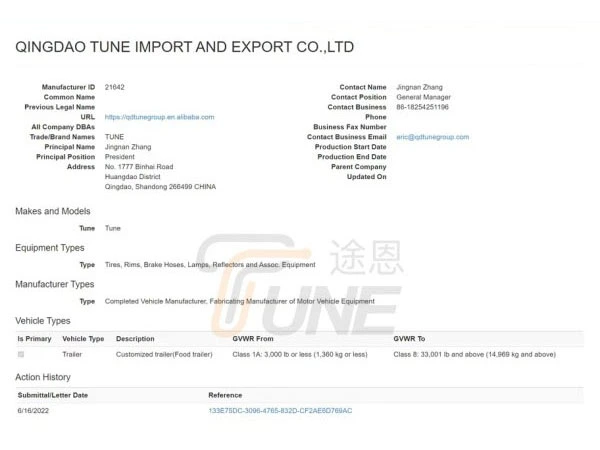
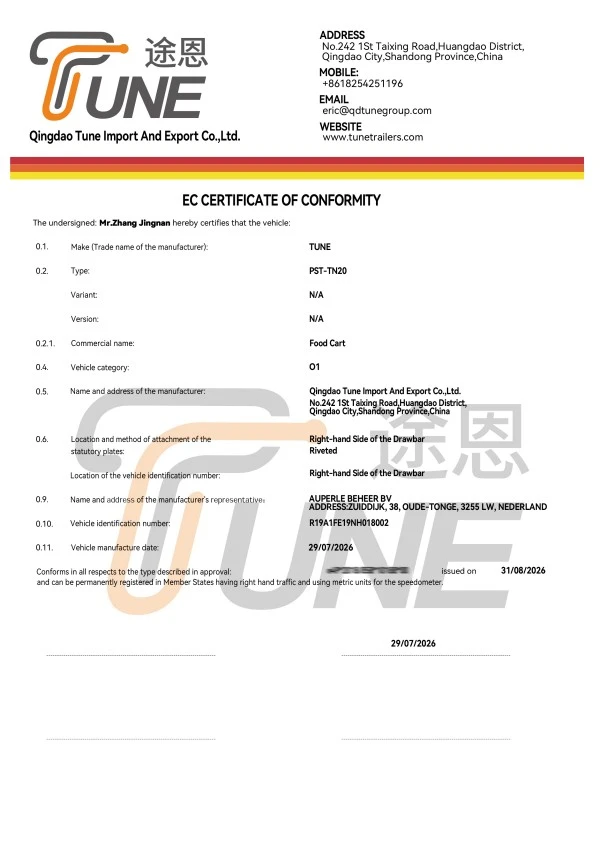
Manual Food Bikes can be supplied with CE, ISO 9001, DOT, EPR, COC, and NSF-aligned documents where required. TUNE holds Alibaba Gold Supplier status and has completed regular third-party inspections by SGS and Intertek. Certificate numbers, scope, and validity can be provided before ordering.
FAQ
Q: How far can it travel?
A: Range depends on the rider and load, not on a battery. A fit rider with a 180 kg payload can cover several kilometers per shift. The internal gear hub helps on slopes.
Q: How long does the cold box hold temperature?
A: With eutectic plates frozen overnight, the box stays below 4°C for up to 10 hours. Time decreases if the lid is opened often or ambient temperature is high.
Q: Does it need any power at all?
A: No. The bike is fully mechanical. The water pump is foot-operated, and the cold box uses passive plates. This makes it suitable for sites without power access.
Q: What maintenance does it need?
A: Chain lubrication, brake pad checks, tire pressure, and gear hub service at intervals. The sealed hub reduces the frequency of drivetrain adjustments.
Q: What after-sales support is available?
A: TUNE offers a 12-month structural warranty, remote technical support, and shipment of common spare parts such as chains, brake pads, pumps, and cold plates. Terms are stated in the contract.