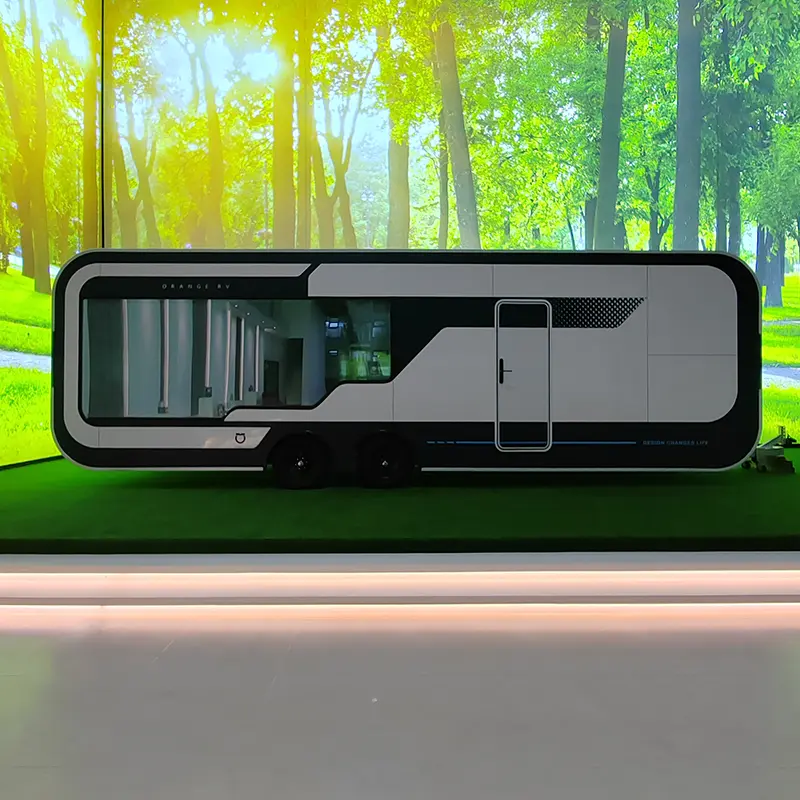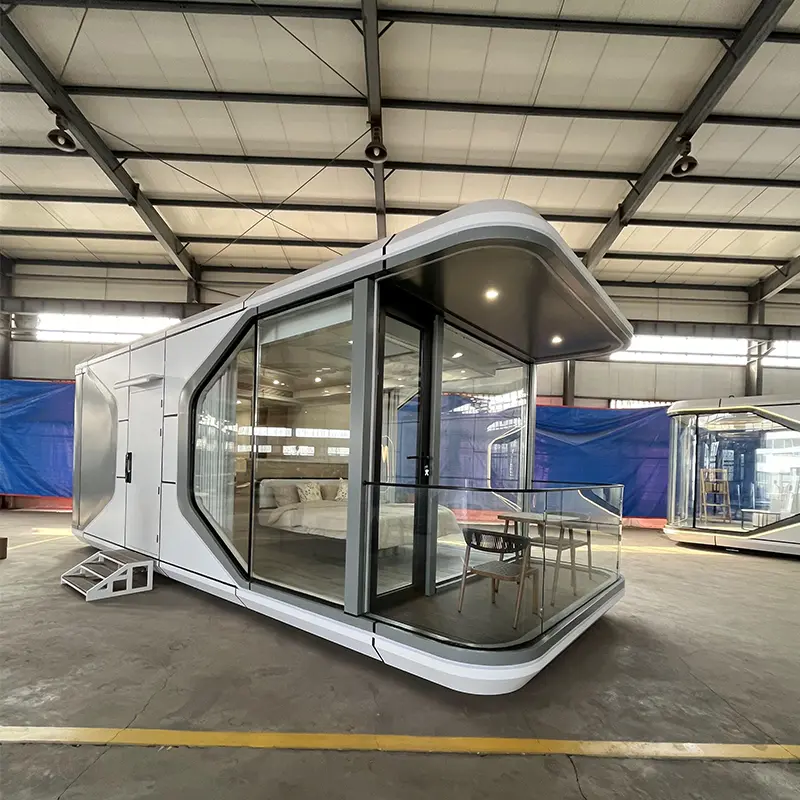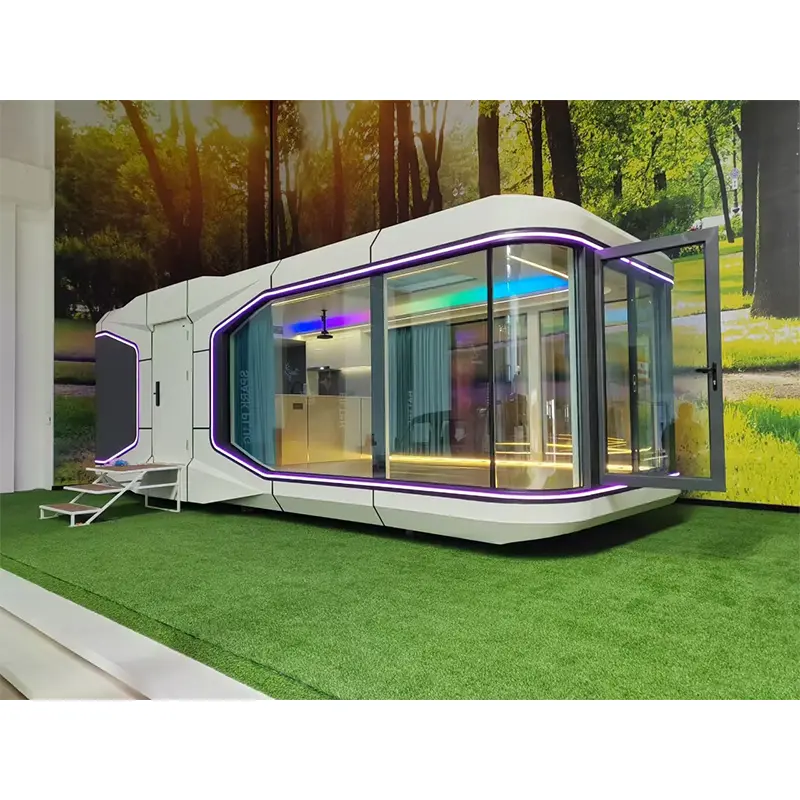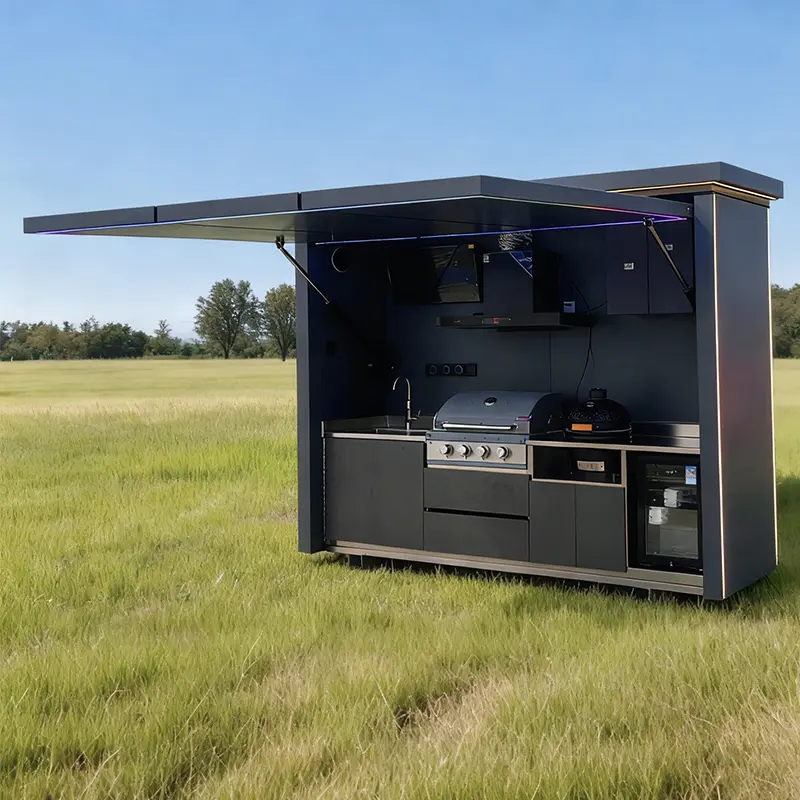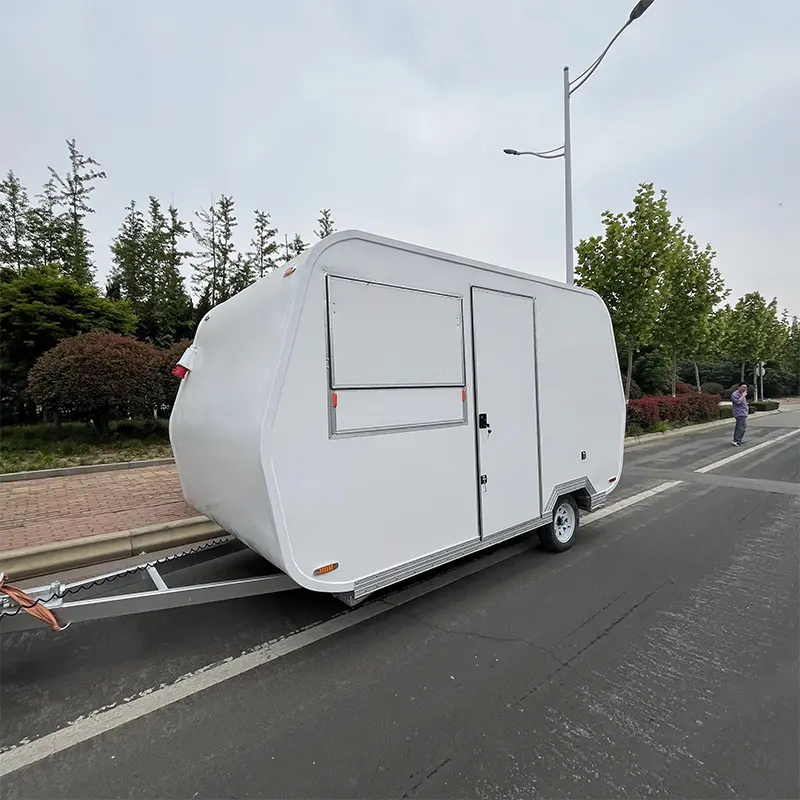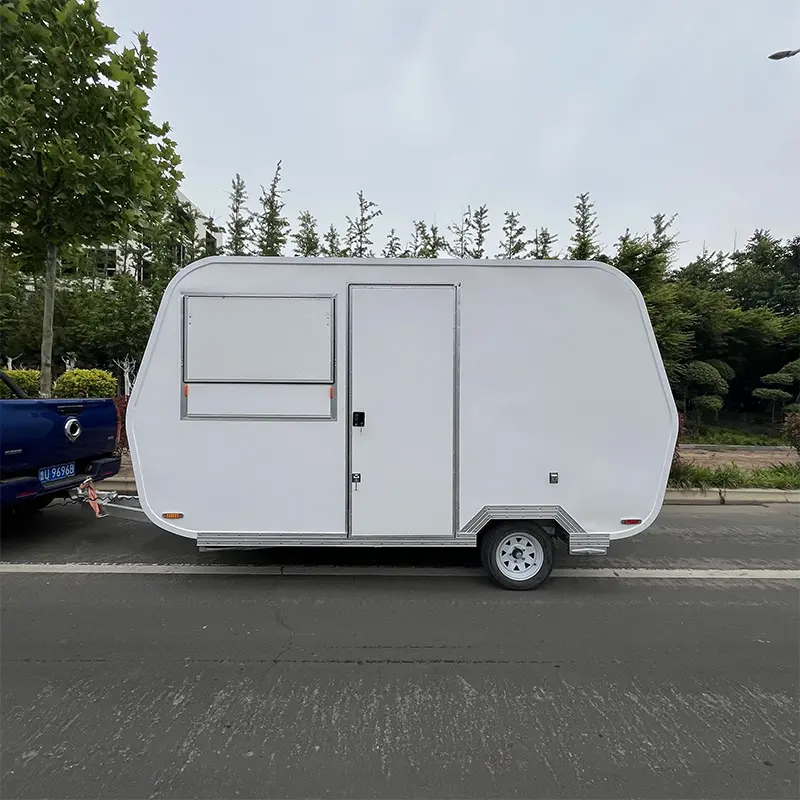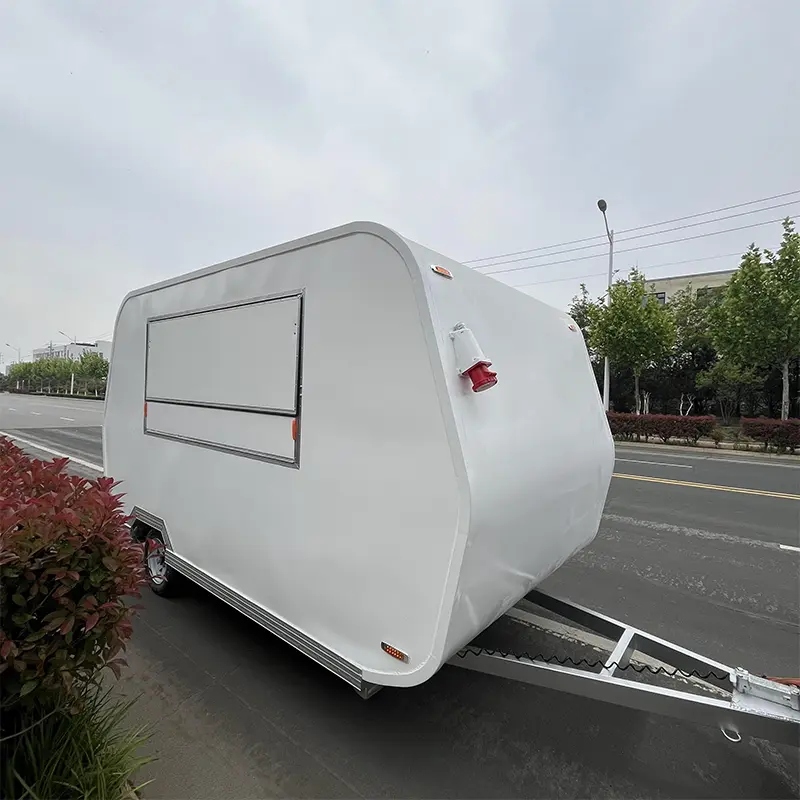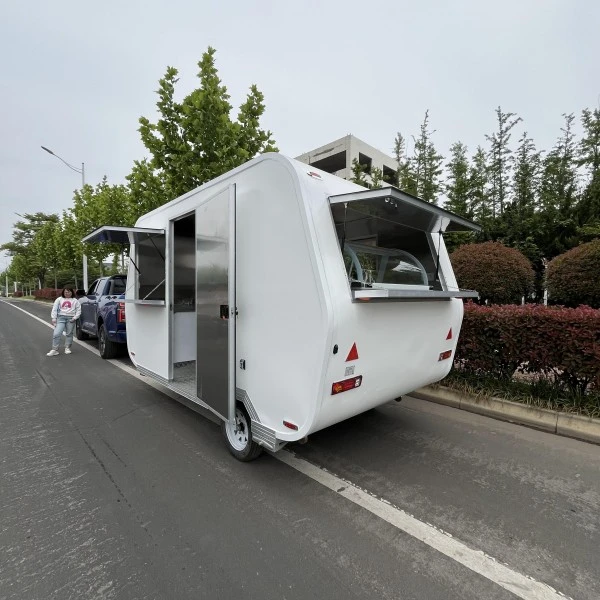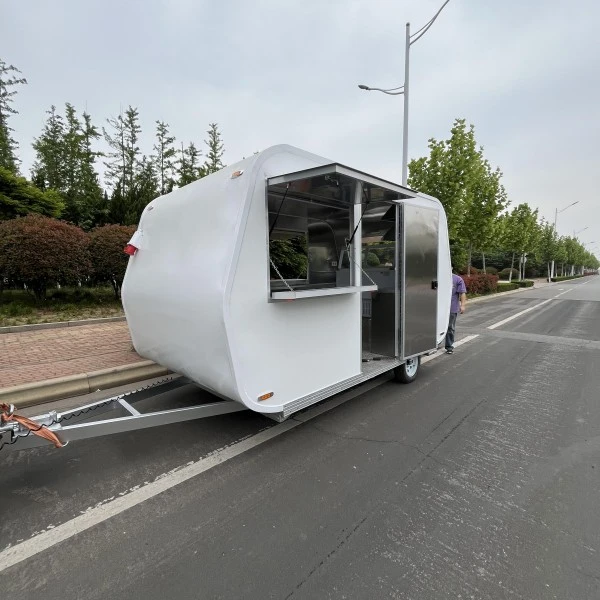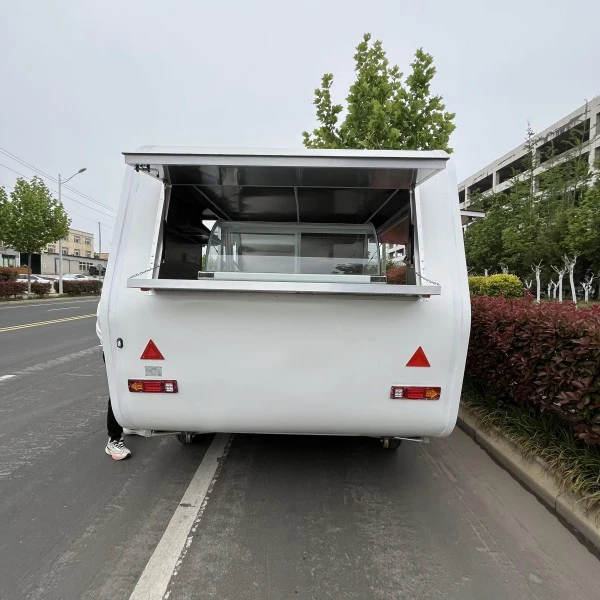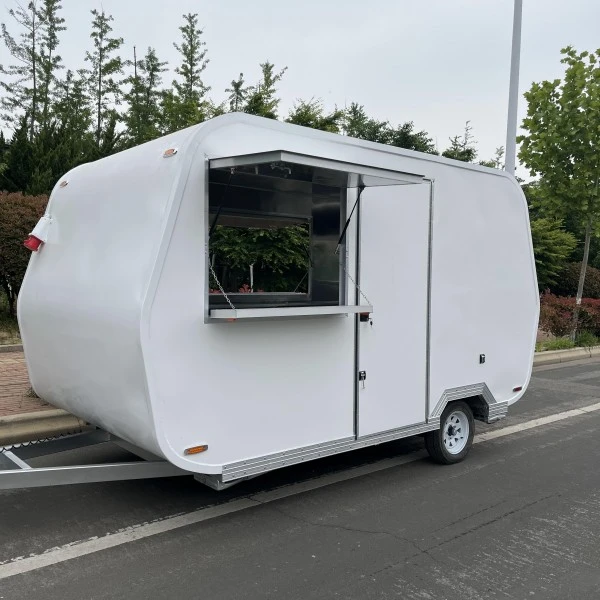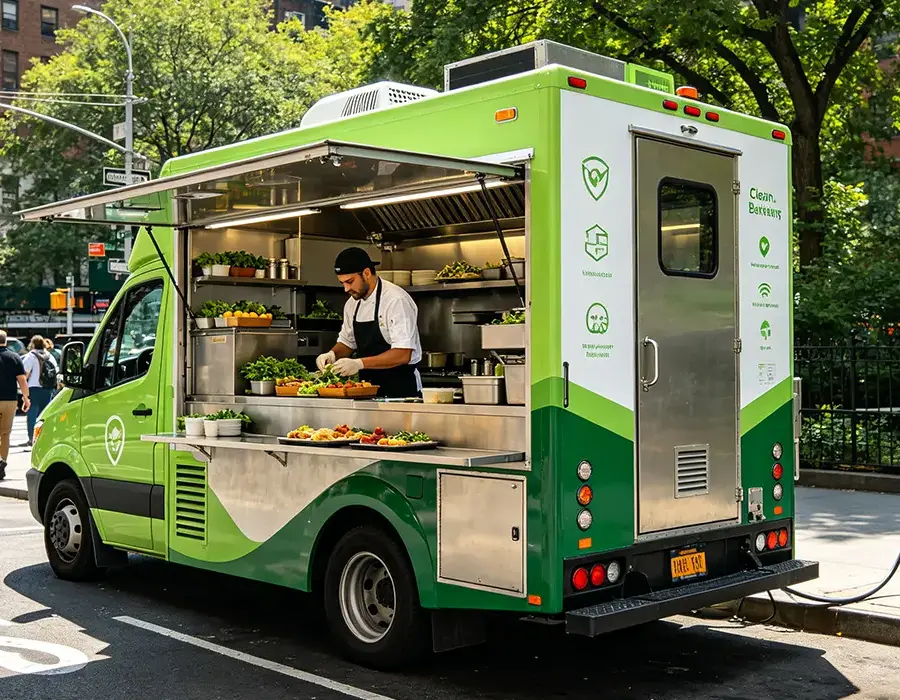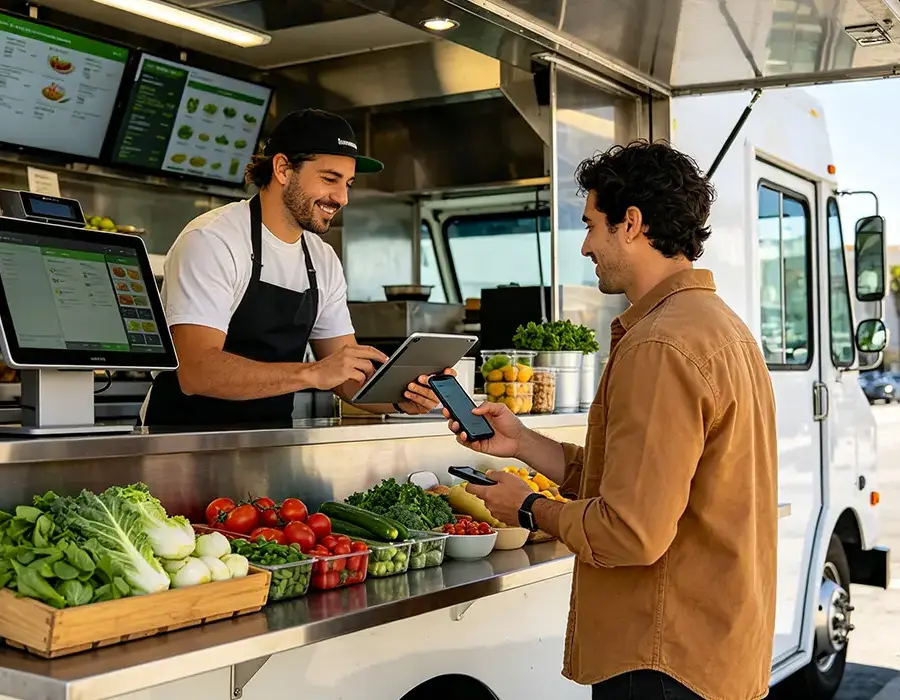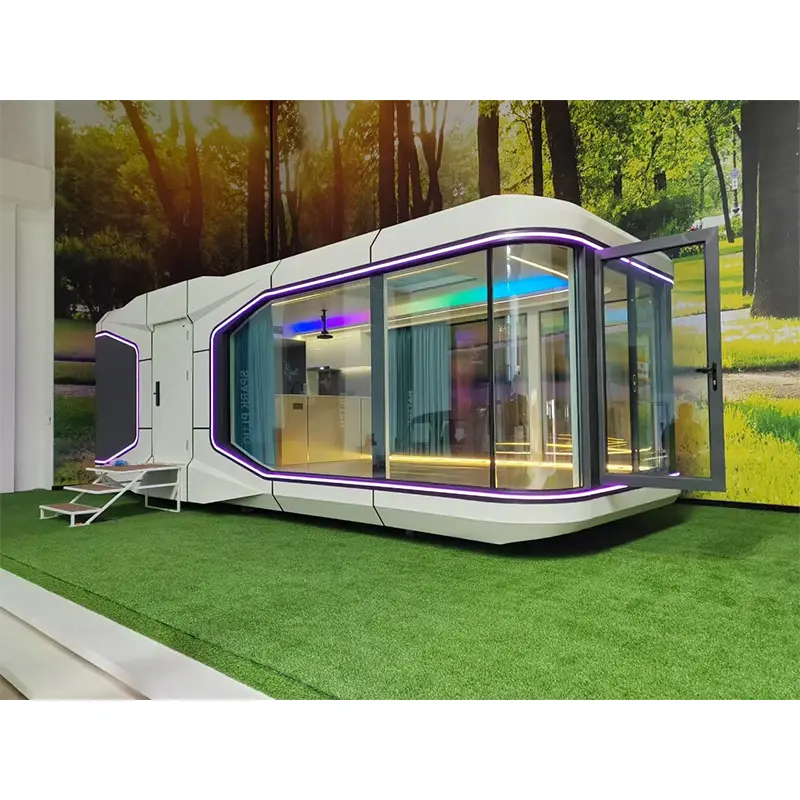
TUNE Supplier Heavy Duty Alloy Food Trailer features a lightweight alloy-style shell, dual hydraulic service hatches, curved-glass frozen-dessert display, stainless-steel workbenches, under-counter refrigeration and non-slip flooring for mobile food and gelato sales.
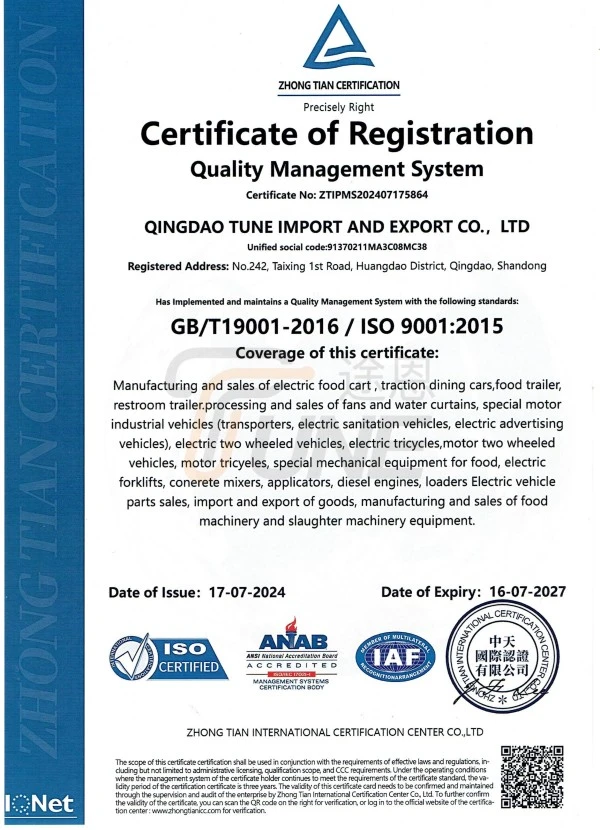
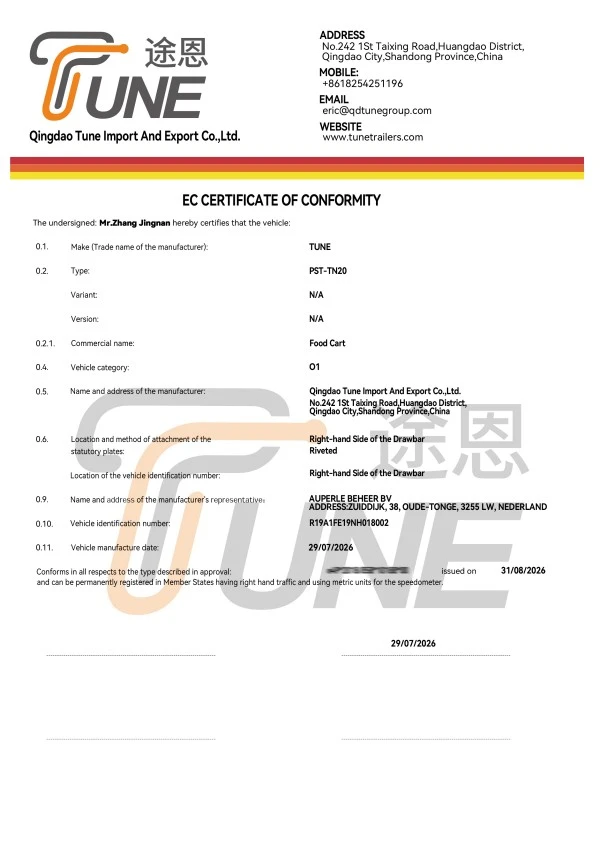
TUNE's Heavy Duty Alloy Food Trailer is a custom mobile catering unit for operators who sell hot food, cold desserts, or beverages from one trailer. It combines a curved white alloy-style body with a stainless-steel interior and dual hydraulic service hatches. The trailer is manufactured in TUNE's Qingdao factory under ISO 9001 quality management and can be supplied with CE and COC documentation for the completed unit. TUNE exports custom alloy food trailers to customers in Australia, North America, Europe, and other markets.
The layout is built around two separate service points. A wide side hatch handles hot food, coffee, or general orders, while a rear hatch sits above a curved-glass gelato or ice-cream display. This allows a business to sell hot and frozen products without sending every customer through the same line. The alloy-style composite shell reduces body weight while keeping a rigid enclosure. Final towing weight depends on the chassis, windows, refrigeration, freezer, water system, and installed appliances.
Certification & Quality Assurance
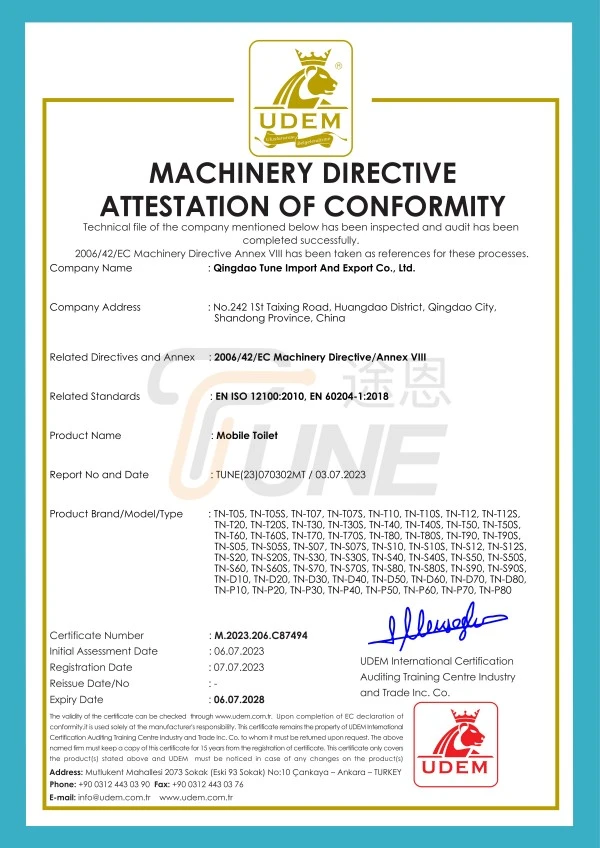
TUNE manufactures this alloy food trailer under ISO 9001 quality management. CE and COC documents can be provided for the completed trailer and selected electrical system, based on the final configuration and destination market. Third-party inspection by SGS or Intertek can be arranged before shipment. Each trailer passes through a documented inspection process covering the chassis, axle, brakes, electrical system, refrigeration, water system, and service hatches.
Product Positioning
The Heavy Duty Australian Alloy Food Trailer is intended for operators who combine hot food, cold desserts, or beverage sales in one mobile unit. Its curved white exterior presents a clean visual style, while the internal layout focuses on quick preparation, product display, and customer-facing service.
The wide hydraulic side hatch can function as the main order and pickup counter. A second rear hatch can be positioned above the curved-glass gelato display, creating a separate serving point for ice cream, gelato, or chilled desserts. This arrangement is useful when the business wants to sell hot food and frozen products without forcing customers through the same service line.
The alloy-style composite shell is designed to reduce unnecessary body weight while maintaining a rigid enclosure. The actual towing weight depends on the chassis, windows, refrigeration, freezer equipment, water system, and installed appliances.
Key Parameters
Category
Reference Information
Product Type
Australian Alloy Food Trailer
Body Style
Aerodynamic curved composite alloy-style shell
Exterior Color
Reference white; custom colors available
Chassis
Reinforced single-axle chassis
Towing Components
A-frame towbar, safety chains and swivel jockey wheel
Service Windows
Dual hydraulic concession hatches
Interior Walls
Food-grade brushed stainless steel
Workbenches
Stainless-steel counters with splash protection
Refrigeration
Under-counter refrigerator/freezer
Frozen Display
Curved-glass gelato or ice-cream cabinet
Flooring
Non-slip aluminum checker plate
Electrical
Circuit-breaker box, safety switches and sockets
Water System
Sink system subject to approved configuration
Application
Food, gelato, ice cream and mobile beverage sales
Final measurements, axle rating, braking system, appliance specifications, and power input should be confirmed in the final technical drawing. The term “heavy duty” is evaluated according to the actual chassis rating, payload, and equipment schedule.
Design Features
Two Product Categories in One Trailer
The layout can support combinations such as gelato and coffee, ice cream and waffles, burgers and chilled drinks, fried snacks and frozen desserts, bakery products and ice cream, or event catering and seasonal menus. This combination allows the operator to use the same trailer for different seasons or event types. Storage temperature, cleaning separation, and staff workflow should be considered when combining hot and cold products.
Curved-Glass Display
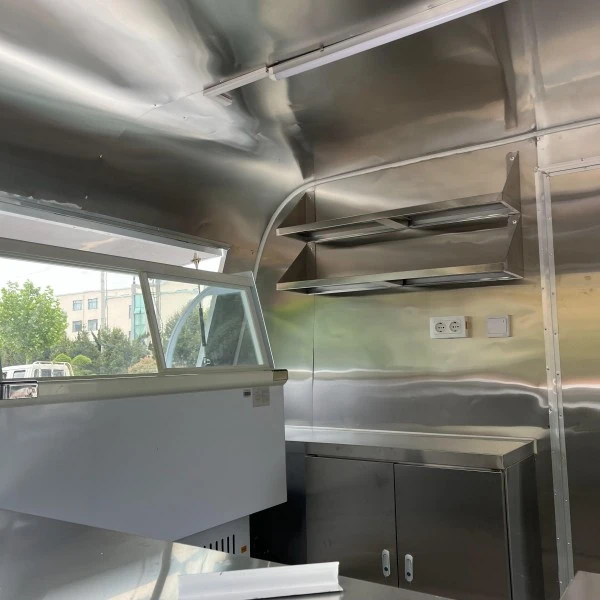
The curved-glass display cabinet gives customers a direct view of frozen products. Internal LED lighting improves product visibility during evening events, while independent temperature control helps the operator manage the frozen-dessert area separately from the main kitchen.
The actual holding temperature should follow the freezer manufacturer's technical instructions and local food-safety requirements. The cabinet should not be overloaded, and air circulation around the cooling equipment must remain unobstructed.
Dual Hydraulic Hatches
The side hatch can be used for ordering hot food, coffee, or beverages. The rear hatch can serve gelato or chilled desserts. When closed, the hatches should be secured with the specified locks and seals before towing.
Gas struts, hinges, brackets, and rubber seals should be inspected periodically. A hydraulic or gas-strut hatch should never be left unsupported if its lifting mechanism shows signs of leakage, deformation, or reduced force.
Alloy-Style Composite Shell
The composite alloy-style body is designed to reduce weight compared with a traditional steel shell while maintaining structural rigidity. The curved exterior improves the trailer's appearance for pedestrian-facing locations. Buyers should confirm the final body weight, insulation, and panel thickness in the technical drawing.
Suggested Service Flow
Customer chooses product
↓
Order is placed at the side window
↓
Hot food is prepared or frozen dessert is portioned
↓
Product is handed over at the selected service point
↓
Counter and display area are cleaned between service periods
For a gelato-focused business, the curved display may become the main customer-facing element. For a mixed food menu, the operator can use the side hatch for hot food and the rear hatch for desserts or beverages.
Interior Details
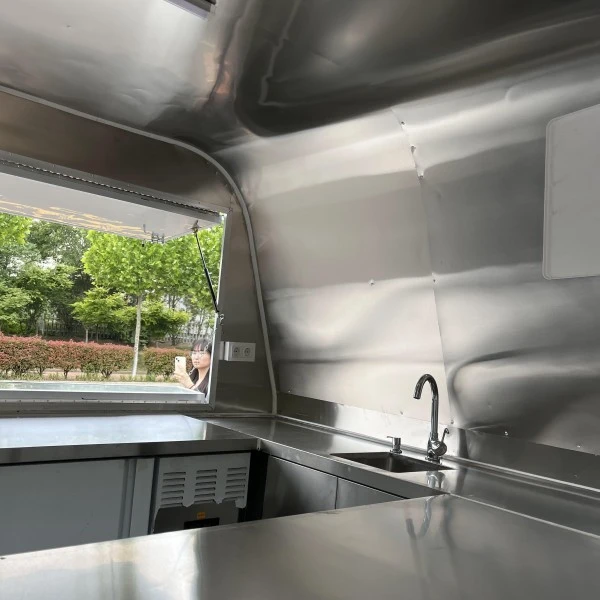
The internal walls and counters are made from stainless steel surfaces intended for commercial food preparation. The smooth workbenches can be used for plating, packaging, and ingredient preparation. Under-counter refrigeration provides space for chilled raw materials, milk, sauces, drinks, or dessert ingredients.
The non-slip aluminum floor is suitable for wash-down cleaning. Operators should remove food debris before washing and keep the floor drain clear. Grease, sugar syrup, and melted ice cream can create slippery areas if not removed promptly.
Operating and Maintenance Notes
Before Service
● Check freezer and refrigerator temperatures.
● Confirm that the display cabinet has adequate airflow.
● Inspect the service hatch supports and locks.
● Connect the correct external power supply.
● Check the circuit breaker and safety switches.
● Prepare clean water and confirm drainage.
● Keep frozen and raw-food storage organized.
During Service
Avoid keeping the hydraulic hatches open longer than necessary in strong wind or heavy rain. Keep hot appliances away from refrigeration air inlets. Do not place cartons or signs over ventilation openings.
After Service
Clean the counters, glass, display pans, handles, and floor. Remove melted product before it enters the drain. Defrost or clean the freezer according to the equipment manufacturer's instructions. Close and lock all hatches before moving the trailer.
Buyer Considerations
Seasonal menu planning
The modular interior can be designed around gelato, coffee, waffles, burgers, snacks, or beverages. Seasonal equipment should be reviewed for storage, electrical demand, and payload before finalizing the build.
High pedestrian visibility
The curved exterior, wide service hatches, illuminated display, and custom branding can improve product presentation. Visibility alone does not determine sales. Product range, queue design, service time, and location remain important factors.
Outdoor event operation
The buyer should confirm access to power, wastewater disposal, ground conditions, wind exposure, and local event regulations. The final installation should include a safe method for securing open hatches in the operating environment.
Compliance and documentation
The product documents refer to international and Australian-related requirements. These references should be verified against the final trailer, selected appliances, and destination authority. The buyer should request:
● Chassis and axle information
● Brake and coupling details
● Electrical test documentation
● Refrigeration equipment data
● Food-contact material information
● Water and wastewater specification
● Local road registration documents
● Food-business approval requirements
A component certificate does not automatically confirm complete vehicle approval.
FAQ
What makes the alloy food trailer different from a steel trailer?
The alloy-style composite shell is designed to reduce body weight while maintaining a rigid enclosure. This can help with towing efficiency and may reduce the required tow vehicle capacity. The final weight depends on the chassis, equipment, and interior layout.
Can the trailer be customized for both hot food and gelato?
Yes. The side hatch and rear hatch can be configured for separate service points. The interior layout, refrigeration, display cabinet, and electrical system can be adapted to the specific menu. Storage temperature and cleaning separation should be reviewed during design.
How are the dual hydraulic hatches maintained?
Gas struts, hinges, brackets, and rubber seals should be inspected periodically. If the lifting mechanism shows signs of leakage, deformation, or reduced force, the hatch should not be left unsupported. Replacement parts are available through TUNE's spare-parts service.
What certifications are available for this trailer?
TUNE can provide CE and COC documents for the completed trailer and selected electrical system, based on the final configuration and destination market. ISO 9001 applies to the manufacturing process. Third-party inspection by SGS or Intertek can be arranged.
What should be confirmed before ordering?
Confirm the final dimensions, axle rating, braking system, appliance list, electrical input, water system, refrigeration model, display cabinet size, branding, packaging, and warranty terms. The approved technical drawing should reflect all selected options.
Warranty and After-Sales Support
TUNE provides product drawings, equipment instructions, electrical information, operation guidance, and spare-parts communication. The contract should distinguish the warranty responsibilities of the chassis, body shell, service hatches, refrigeration cabinet, electrical components, and third-party appliances.
The Australian standard catering trailer is suitable for buyers who want one compact platform to combine frozen desserts, beverages, and selected hot-food products while maintaining a clear separation between customer service and food preparation. TUNE supports customers from initial configuration through after-sales service to help ensure the trailer matches its intended commercial use.
Hot Tags: Heavy Duty Food Trailer Manufacturer, Australian Alloy Food Trailer Supplier, Food Trailer Wholesale
Send your inquiry to Tune Technology for a custom food truck or mobile restroom trailer. Provide your requirements and receive a detailed quotation and production proposal. Start your mobile business with a trusted China manufacturer.
We use cookies to offer you a better browsing experience, analyze site traffic and personalize content. By using this site, you agree to our use of cookies. Privacy Policy